
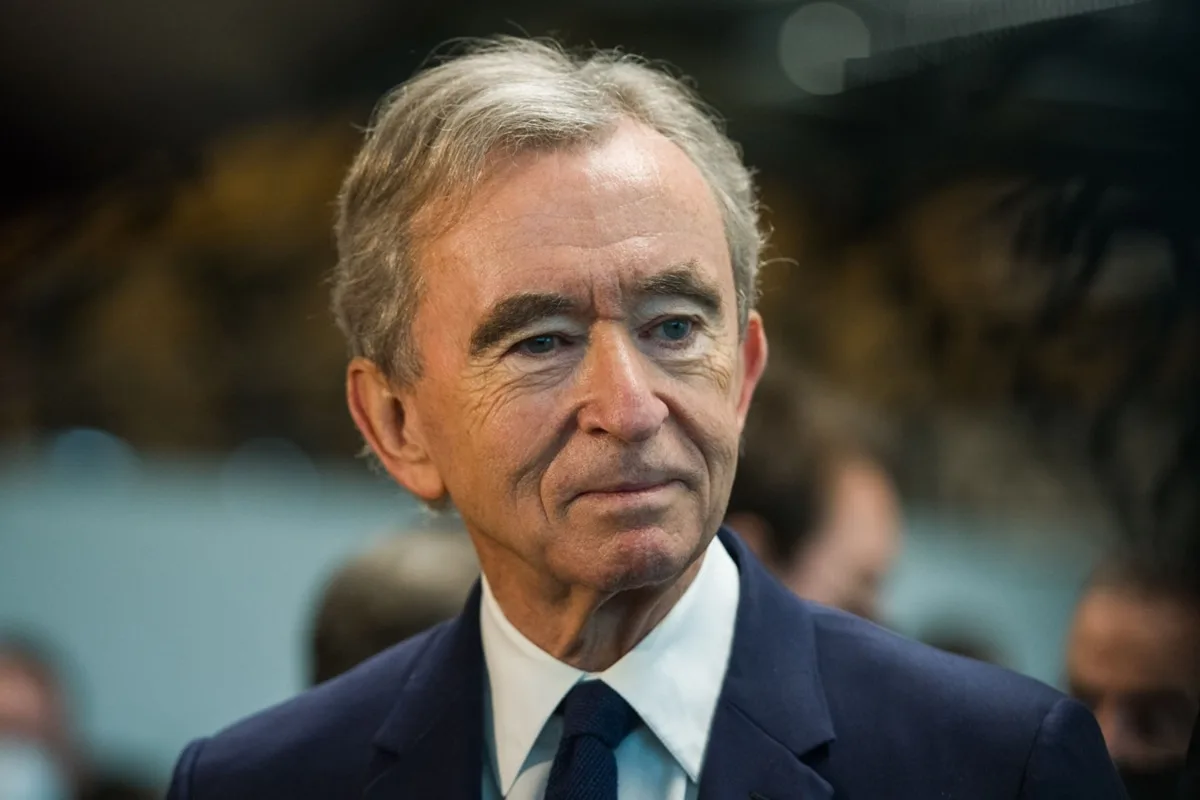
Bernard Arnault does not stroll. He prowls. And not through corridors of power, but through ateliers, boardrooms, and museum galleries lined with Monets. If there is a single thread connecting Louis Vuitton handbags, Beyoncé’s Renaissance tour wardrobe, and the architectural symmetry of Fondation Louis Vuitton, it’s him. And he probably owns the embroidery, the copyright, and the building it was made in.
As CEO and chairman of LVMH, Arnault isn’t building a company. He’s building a civilisation. One silk scarf, one signature font, and one impeccably timed acquisition at a time. With 75 brands under his belt, a net worth that makes your accountant sweat, and a fondness for precision that borders on the surgical, Arnault has redefined what it means to be powerful. Quietly. Strategically. Like a man who doesn’t yell but still somehow ends up owning your house and renting it back to you via a boutique hotel.
Dior, drama, and Dior again
He started in construction. Yes, the man who owns every brand you’ve ever been too poor to afford began with cement mixers and profit margins. He took over his father’s business and then, with the enthusiasm of a Bond villain holding a degree in urban planning, pivoted into fashion.
It was 1984. France was nationalising like mad, and Boussac, the group that owned Christian Dior, was dying a slow, unfashionable death. Arnault swooped in, sold everything but Dior, and walked away with a jewel. The message was clear: he wasn’t here for the fluff. He was here for the crown. A couture coup disguised as corporate pragmatism.
And he didn’t stop there. Arnault understood early what others in the fashion industry often forget: that heritage sells, but only when it’s curated with the obsession of a museum director and the ambition of a hedge fund manager.
The LVMH coup (aka the most polite corporate knife fight in history)
In 1989, Arnault pulled off what can only be described as a luxury coup. He took over LVMH, a group that at the time was as cohesive as a group chat with 75 people in it. He brought order. He brought discipline. He brought that delicious mix of creative freedom and financial terror.
Designers loved him. Until they didn’t. Then they got replaced. Sometimes with someone younger. Sometimes with someone hungrier. Always with someone he approved.
And yet, under his watch, brands like Louis Vuitton, Fendi, Loewe, and Tiffany didn’t just survive. They morphed into cultural institutions. Arnault doesn’t just collect brands. He curates dynasties. He orchestrates aesthetic empires and tweaks them like a conductor adjusting tempo during a symphony.
No one says “no” to Bernard
He handpicks creative directors the way a watchmaker selects tourbillons – with knowledge, flair, and zero tolerance for mediocrity. He personally signed off on the $16 billion Tiffany & Co. acquisition. And he rotates his children through executive roles like it’s a high-stakes episode of Succession, but with better tailoring and less screaming.
All five Arnault kids work in LVMH. All are being groomed for greatness. None have publicly embarrassed him. Coincidence? Not likely. Strategic design? Absolutely.
When asked about legacy, he shrugs. Because legacy is what you leave behind. Arnault is still very much present. He is not a relic of the past or a placeholder CEO. He is the main character of luxury.
Philanthropy, precision, and just a hint of menace
This is a man who donated €200 million to rebuild Notre-Dame and then went back to fine-tuning the colour palette at Celine. He builds museums. He restores department stores. He invests in French artisans the way others invest in crypto – quietly and with terrifying permanence.
He believes luxury is about restraint. That the internet is useful but shouldn’t dictate taste. That quality trumps hype. That culture beats commerce, unless you’re clever enough to sell both in the same box. And that nothing – absolutely nothing – is more luxurious than control.
Underneath the philanthropy is an architect of taste who happens to also be a capitalist genius. Arnault isn’t just shaping consumer preference. He’s redefining the idea of cultural ownership. He is the reason you know what Damier print is. The reason there’s a waiting list for handbags. The reason exclusivity still feels like an invitation-only experience.
Legacy on lock
Arnault isn’t loud. He doesn’t need to be. LVMH is valued at over $500 billion. The brands under his control shape global culture, influence design schools, and dominate red carpets. And he still shows up, every day, in his usual navy suit, looking like the kind of man who drinks espresso by glaring at it.
He didn’t just shape modern luxury. He made it monogrammed, limited edition, and terrifyingly profitable. He designed the rules, enforced them globally, and now collects royalties in the form of admiration and market share.
If luxury had a godfather, his office would be on Avenue Montaigne and his business card would simply say: “You already know who I am.”