
When Vadim Fedotov talks about health, it’s not in vague wellness clichés. The 6ft 9 in former professional basketball player is methodical, data-driven and allergic to hype. “I used to have 30 bottles of supplements in my kitchen and no idea which ones worked,” he says. “When I finally did a blood test, I realised the doses were either too weak or totally irrelevant for my body.”
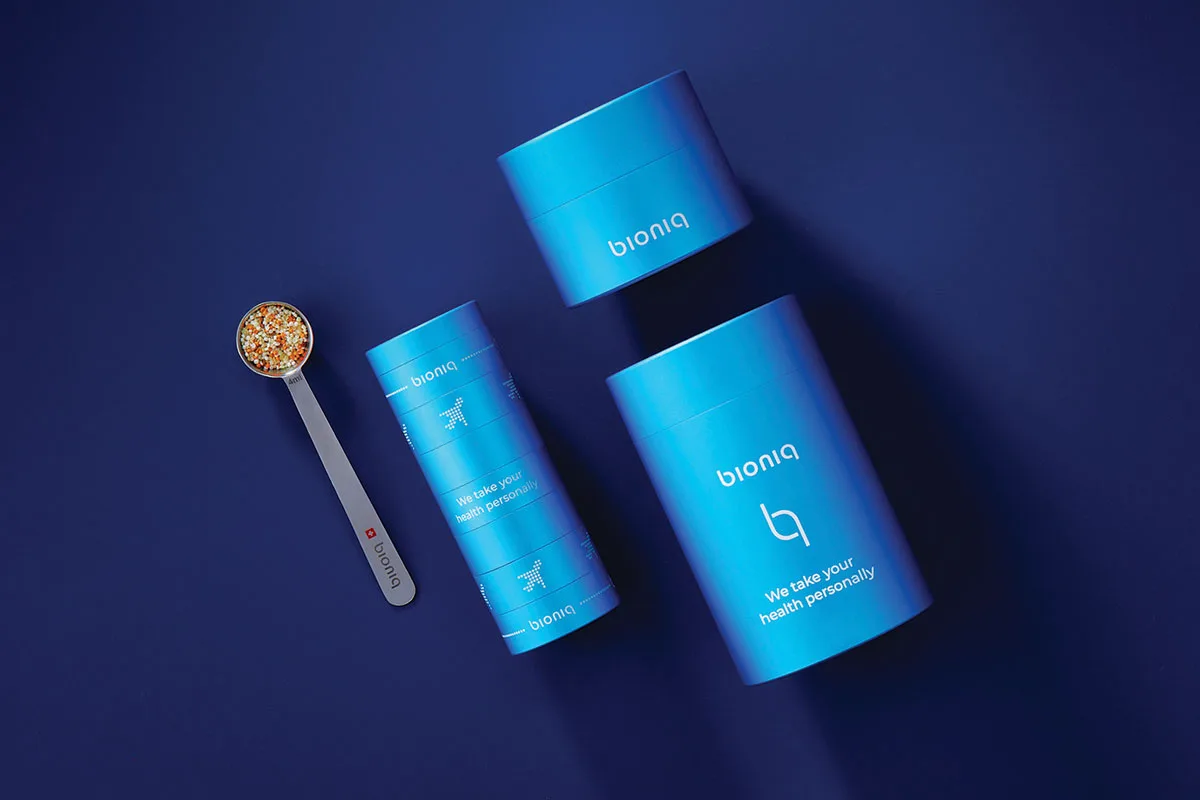
That realisation became Bioniq, a health-tech company founded in 2019 by Fedotov. Rather than selling generic multivitamins, Bioniq analyses individual biomarkers and lifestyle data to create personalised formulations. Each batch is mixed to order, using an algorithm refined by hundreds of thousands of blood-test data points.
“The recommended dose on a bottle has to be safe enough that even a child could drink it,” says Fedotov. “But I’m a 260-pound former athlete. One size doesn’t fit all.”
From locker room to lab
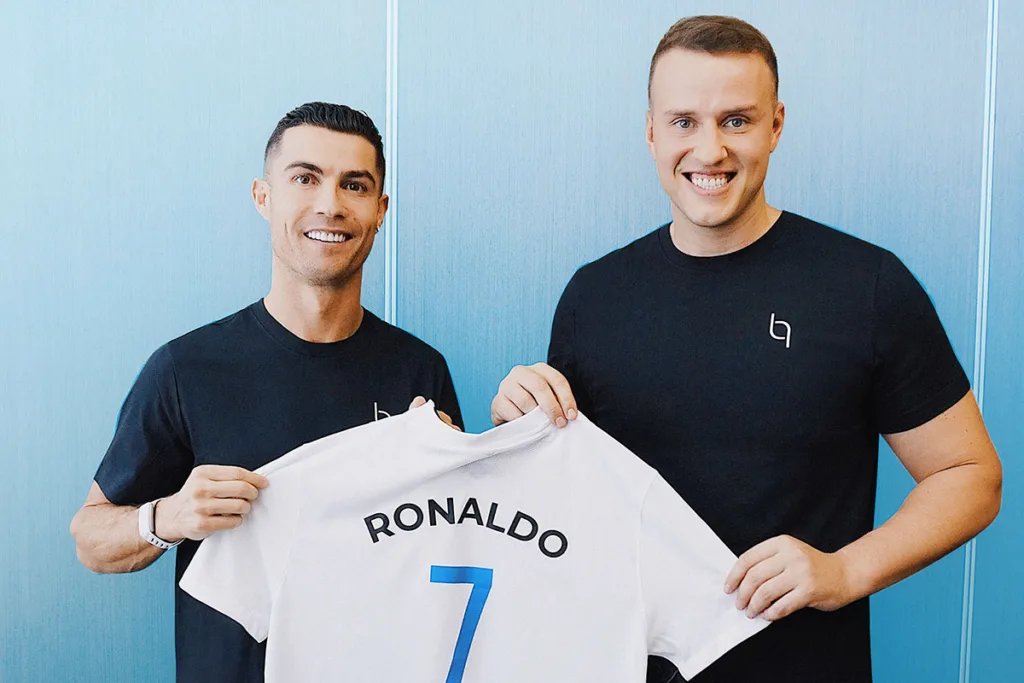
Bioniq’s turning point came in 2022 through an unlikely introduction. Manchester United defender Diogo Dalot began taking Bioniq and soon brought it into the team dressing room. “Cristiano Ronaldo saw Dalot using it every day and asked what it was,” recalls Fedotov. “His team reached out, he tried it, saw the results, and stayed on the product for more than a year. Then he told us he wanted to invest.”
Having the world’s most followed athlete become both user and shareholder was “a dream scenario,” Fedotov admits. “It validated everything we built. When someone who can access any product on Earth chooses yours, it’s the strongest possible signal to the market.”
Ronaldo’s endorsement sent Bioniq global. The brand now operates in over 70 countries, with a valuation exceeding $80 million and a customer base spanning elite athletes to wellness-focused executives.
But the groundwork for Bioniq started long before its London launch. Between 2011 and 2017, studies were conducted on around 1,000 Olympic athletes in Switzerland to measure how micronutrient optimisation affected performance. “Athletes were sick ten fewer days per year and improved cognitive function by up to 1.5 times,” says Fedotov. “It proved what personalised nutrition could do.”
That database formed the backbone of Bioniq’s two product lines: Bioniq PRO, built around blood testing, and Bioniq GO, based on an extensive questionnaire that can predict blood results with over 80 per cent accuracy. GO costs $79 a month; PRO, $199. Both use patented Swiss-made granules and adaptive dosing powered by artificial intelligence.
“We’ve had more than 200,000 people do blood tests and 8 million fill in the questionnaire,” says Fedotov. “AI lets us cross-reference everything and calculate safe, efficient dosages. What used to take nine months of trial and error now takes three.”
Results, not dreams
The biggest surprise wasn’t technology but human behaviour. “People say they want to know what’s going on inside their body until they actually have to look,” he laughs. “They detox, diet or ‘prepare’ before a blood test instead of showing their normal state. And many simply don’t want to know the bad news.”
For Bioniq, education is central. “Most supplements sell dreams. We show results. You take the test, start the product, test again after three months, and see measurable change. We’re the only company that gives you that feedback loop.”
Logistics remain complex. “Every order is unique. We’ve never produced the same formulation twice,” Fedotov notes. Yet the model is built for scale: 25 peer-reviewed publications and partnerships with institutions like King’s College Hospital and Lanserhof prove its efficacy. “Don’t trust us – trust the data.”
The Middle East advantage
Fedotov moved to Dubai four years ago and found the UAE incredibly receptive. “In London, doctors would tell me they need thirty years of research before they even look at something new. Here, I was meeting hospital heads ready to integrate personalised medicine within months.”
Bioniq now has an office in Dubai and a partnership with Al Borg Laboratories, giving it access to more than 200 locations across Saudi Arabia. It also signed an MOU with the Department of Culture and Tourism – Abu Dhabi to support national wellness initiatives.
“The UAE and Saudi are incredibly open to innovation,” says Fedotov. “They want to lead in health tech, not follow.” He also tailors formulations to local physiology: “People here have different cholesterol, iron and vitamin D levels. Climate, diet and ethnicity all matter. We adjust accordingly.”
Lessons from sport
Discipline, teamwork and communication underpin Fedotov’s leadership style. “Sports teach you patience and humility,” he says. “Don’t ask anyone to do something you wouldn’t. Give credit in public, criticise one-on-one. If you care about the person next to you, they’ll play harder – the same applies in business.”
He hires people with what he calls an “athlete mindset”. “You don’t need to be a pro. If you push yourself until you’re on the floor after a gym class, you’re an athlete to me. I want that mentality in my company.”
A competitive field
The celebrity-backed supplement market is crowded, with names like David Beckham investing in rival brand IM8. Fedotov, however, isn’t fazed. “There’s no ‘next Cristiano’ for us,” he says diplomatically. “We already have Diogo Dalot as an investor too, and we’re talking to female ambassadors. But our focus is market penetration, not celebrity marketing.”
The global supplement industry is worth $460 billion; the US accounts for half of that. “Our US market share is still under 1 per cent,” he says. “We don’t need new verticals – we just need to show people why personalisation matters.”
Fedotov’s story began on the basketball court. After playing for Germany’s U20 national team and the University of Buffalo, repeated injuries pushed him away from sport and into business.
The former basketball player remains active in Dubai’s sports community as an advisory board member for Dubai Basketball, which he proudly helped sponsor. “Seeing that team compete in the EuroLeague within a year of forming – that can only happen in Dubai,” he says.