

Owning a football club used to be a playground for the ultra-rich. Then Ryan Reynolds and Rob McElhenney rewrote the script. Their £2 million purchase of Wrexham AFC transformed a small Welsh side into a global media story now valued north of £100 million. Their success ignited a new wave of interest from entrepreneurs, family offices, and private investors who now see club ownership not just as a passion project but a viable business venture.
Across Europe, opportunities appear constantly – some public, others whispered. The entry price can rival a London penthouse, but football is unlike any other asset class. Emotion clouds judgment, results dictate revenue, and the due-diligence process is brutal. Les Reed, founder of Reed Consulting and board adviser to Wrexham AFC, always begins with one question: Why do you want to do this? “There’s a lot of misunderstanding around why people invest in football clubs,” he says. “Some want to raise their profile or diversify their assets. Others just love the game. But I’ve never met an investor who didn’t want a return on investment in some form. You have to know your why – it’s usually a mix of all those things.”
Charlie Methven, former co-owner and executive director of Sunderland AFC and CEO of Charlton Athletic, has seen plenty of first-time buyers stumble. “Most have made fortunes elsewhere and assume football works like every other sector,” he says. “It doesn’t. They need partners who’ve been through it before – to assess the market properly and run the kind of due diligence football demands.”
The right club
England remains the heartland for buyers, with more than 90 professional clubs across four divisions. Valuations range from billions of pounds for Premier League giants to just a few million for smaller League Two sides such as Cheltenham Town. According to Jordan Gardner, consultant at sports-intelligence firm Twenty First Group, “there are always clubs for sale. Some owners quietly test the market, others are forced to sell after relegation or financial trouble.” Professor Rob Wilson of the University Campus of Football Business believes most would at least listen to an approach. “Whether on the open market or not, I suspect three-quarters of clubs would be open to a sale or new investment,” he says. That openness has drawn interest from abroad. A Kuwait-based consortium recently acquired Milton Keynes Dons, while Reading FC and Leyton Orient have seen new owners in the last six months.
Different game
A football club’s books reveal a different world to traditional business. Analysts pore over revenues and costs, especially player wages and cash flow. One key measure is the wage-to-revenue ratio. Others include matchday income, broadcast rights, sponsorships and player-transfer profits. Reed urges investors not to overlook untapped revenue. “Most stadiums are used for 25 days a year,” he says. “Events, concerts and conferences can transform the balance sheet.” Still, Gardner warns that financial logic only goes so far. “Revenues depend on performance, which can swing with one missed penalty,” he says. “You carry reputational and financial risk, and you often need to inject extra capital when results go wrong.”
Wilson agrees that impatience is a killer. “Owners try to buy success too quickly,” he says. “Sustainable growth takes patience and structure, not emotional spending.” Even the best strategies can collapse under the weight of sporting chance.
The profit illusion
Fewer than one in ten clubs make money. But Gardner argues context matters. “Many clubs aren’t even trying to be profitable. The owners have other goals,” he says. “The ones that control wages and develop players for sale are the exceptions.” Methven has lived that turnaround. “When I joined Sunderland, the club was £160 million in debt and losing £27 million a year,” he recalls. “Four years later, it was debt-free, breaking even, and we sold at a significant profit.” The lesson: discipline beats drama.
If one message has emerged from Wrexham’s fairytale, it’s that fans are not customers -they’re stakeholders. “The fan is your customer, but without them there is no club,” says Gardner. “Community engagement builds loyalty, fills seats and attracts sponsors who value authenticity.”
Simon Leslie, chairman of Eastbourne Borough FC and long-time media entrepreneur, has seen it firsthand. “The community is the club,” he says. “Treat fans like numbers and they’ll treat you the same. Bring them in, give them a voice, and they become your best marketers.” That shift has turned even small clubs into content engines. “We’ve built a digital platform with over 365,000 engaged followers,” Leslie says. “Modern sponsors don’t just want logos on shirts; they want clicks, content and stories. Be a media company that happens to own a football club.”
Sponsorship
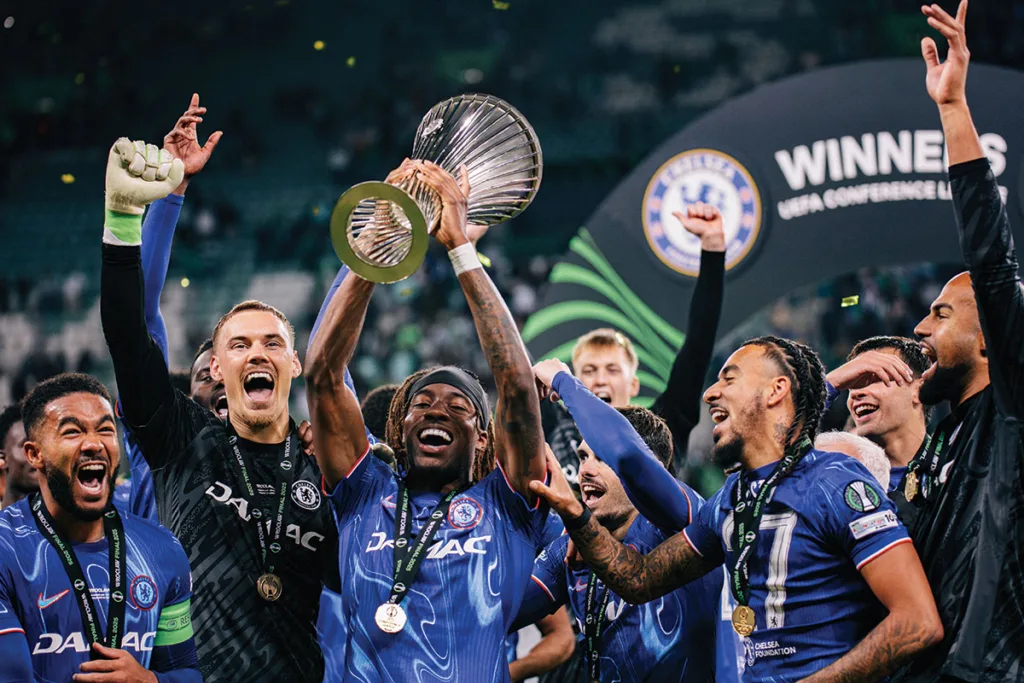
Sponsorship remains the most visible currency of football. Last season, Chelsea FC signed a short-term shirt deal with Dubai developer DAMAC, reflecting the region’s growing presence in global sport. Smaller teams rely on local brands, but even they are evolving. Dynamic LED advertising and social-media integration now replace static boards and outdated deals.
But Leslie adds a cautionary note: “Don’t fall in love with the badge before you’ve opened the books. Football isn’t a normal business; it’s a religion and a community centre rolled into one. If you show up with a spreadsheet and no soul, you’ll lose the dressing room and the fanbase.”
The Middle East
The Gulf’s role in football is already reshaping the sport. Qatar’s ownership of Paris Saint-Germain, Abu Dhabi’s City Football Group empire and Saudi Arabia’s headline-grabbing Pro League have changed perceptions of both money and ambition in the game.
For investors in the region, the next phase may be outward rather than inward – acquiring clubs abroad to build brand equity, scouting networks and media reach. Kieran Maguire, football-finance lecturer and podcast host, says the attraction is real but complicated. “The Middle East has appeal, but state ownership of some clubs makes competition expensive,” he says. “English football still delivers the biggest global audience – Premier League matches air in 190 countries.”
But Gardner sees potential from an American wave of investors. “My friend Ben Harburg recently bought a club in Saudi Arabia,” he notes. “Others will follow. The Middle East offers high-growth, emerging-market potential for investors who understand the culture.”
For many Gulf family offices, football also fits a broader strategy of soft power and diversification. Beyond returns, ownership offers brand visibility, tourism potential and cultural influence – assets that extend well beyond the pitch. Just be warned that clubs rarely make easy money. Yet, with the right structure, vision and patience, they can make a lasting impact. Leslie sums it up best: “The right owner with the right mindset can turn almost any club around. But it takes belief, not ego – and very deep pockets.”