
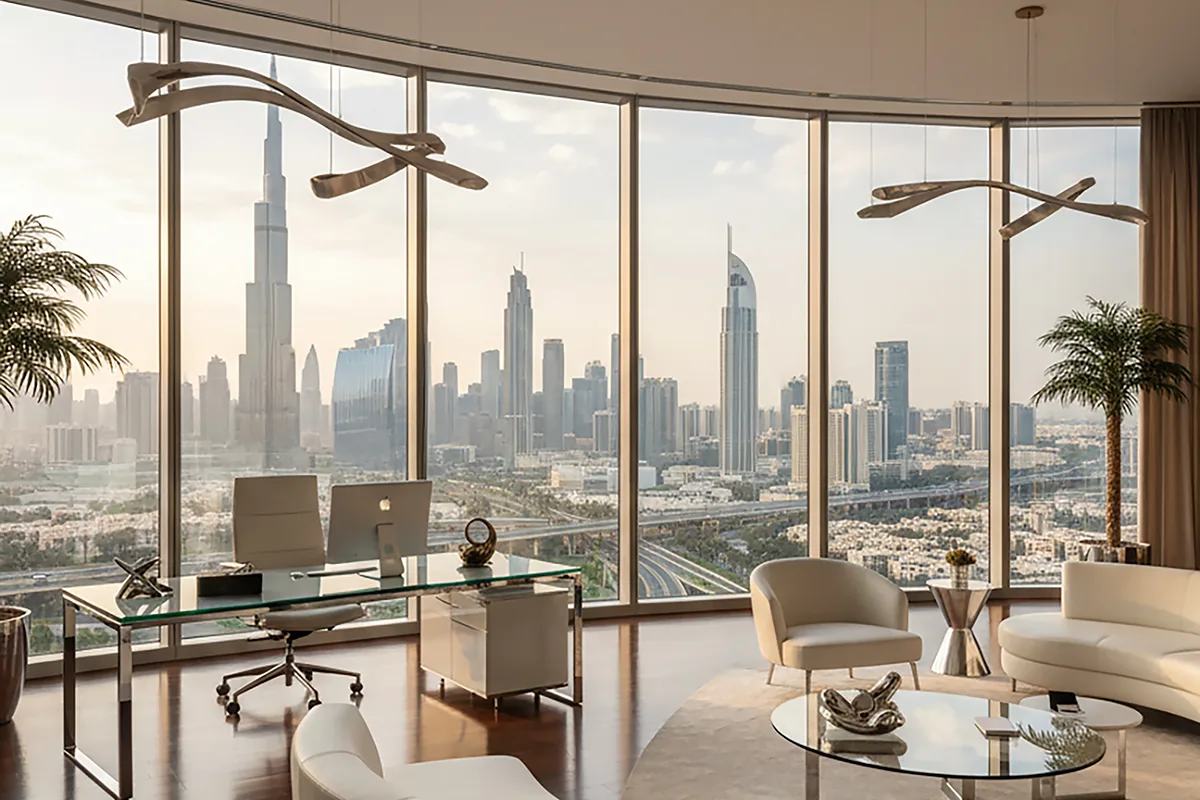
A quiet revolution is happening in the world’s boardrooms and it’s taking off from Heathrow’s private terminals. Global CEOs, once anchored to London, New York and Singapore, are now booking one-way tickets to Dubai.
In the past 18 months alone, a growing list of high-profile leaders from Informa’s Lord Stephen Carter to Revolut’s co-founder Nik Storonsky have joined the exodus. What’s pulling them isn’t just the promise of sun and zero income tax. It’s something far more strategic: speed, scale and a fresh sense of possibility.
I arrived in the UAE back in 2008, when “digital disruption” was still a foreign phrase in the region. There was no playbook for scaling billion-Dirham ventures here so we wrote one. I’ve since watched Dubai evolve from an ambitious trading hub into one of the most exciting ecosystems for business leadership on the planet. And now, the rest of the world is catching on.
The magnetic pull
This relocation wave is about more than lifestyle. Dubai, along with Riyadh and Abu Dhabi, has redefined what it means to operate globally. Zero income tax helps, sure, but it’s the ecosystem effect that seals the deal.
Executives are moving here not to save, but to scale. They’re drawn by the region’s business agility, regulatory speed and unparalleled connectivity. You can have breakfast with investors from Asia, lunch with partners from Europe, and dinner with clients from the US – all without changing time zones.
And then there’s the lifestyle advantage. In Dubai, “work-life balance” doesn’t mean slowing down; it means operating at full velocity, surrounded by safety, sunshine and ambition. For leaders used to high-tax, high-pressure environments, it’s a recalibration – a place where you can go faster, but breathe easier.
From tax havens to talent hubs
A decade ago, sceptics dismissed the Gulf as a playground for the wealthy. Today, it’s a powerhouse for innovation. The DIFC is now among the world’s top financial centres. The Dubai Future Foundation, Hub71 and Abu Dhabi Global Market are driving the region’s tech and fintech surge.
Global fintechs, AI ventures, and sustainability startups are planting roots here because the infrastructure, physical and regulatory, encourages experimentation. Bureaucracy doesn’t smother ideas; it accelerates them. Decision-making happens fast and execution even faster – something every founder and CEO quietly dreams of.
When Revolut’s Nik Storonsky chose to relocate, he cited “tax shifts and lifestyle advantages.” He’s also, incidentally, my more recent gym buddy – a reminder that in Dubai, your morning workout can just as easily turn into a conversation about scaling global fintech. But beneath the banter lies a truth: the Middle East rewards builders. Whether you’re leading a listed company or a stealth startup, momentum matters more than hierarchy.
The region’s CEO moment
Having helped scale businesses from zero to billion-Dirham valuations here, from Groupon’s hypergrowth to PropertyFinder’s rise to unicorn status, I can say this with conviction: the Middle East is entering its CEO moment.
We’re witnessing a convergence of capital, creativity and conviction that’s rare in global markets. Governments in the region think in decades, not quarters. They’re not just building for GDP; they’re designing for legacy. And that’s exactly the environment visionary leaders crave.
The influx of global executives isn’t merely a relocation trend; it’s a reallocation of ambition. It reflects a new understanding of leadership itself – one that’s no longer tethered to geography. CEOs don’t have to live where their headquarters are; they live where their growth is.
What comes next?
This migration is only just beginning. The same gravitational forces that once pulled innovators toward Silicon Valley or Mayfair now point firmly toward the Gulf. Capital follows conviction and right now, conviction lives here.
As AI, sustainability and digital transformation reshape industries, leaders want to be close to where policy, infrastructure and opportunity intersect. And that intersection runs directly through Dubai, Riyadh and Abu Dhabi.
The CEOs arriving today aren’t retiring here; they’re retooling here. They’re choosing to operate in environments that move at the same pace they do fast, intentional and ambitious.
If history has taught us anything, it’s that those who see the shift early and act decisively don’t just adapt to the future – they define it. The Middle East isn’t just attracting global leadership; it’s redefining it.