
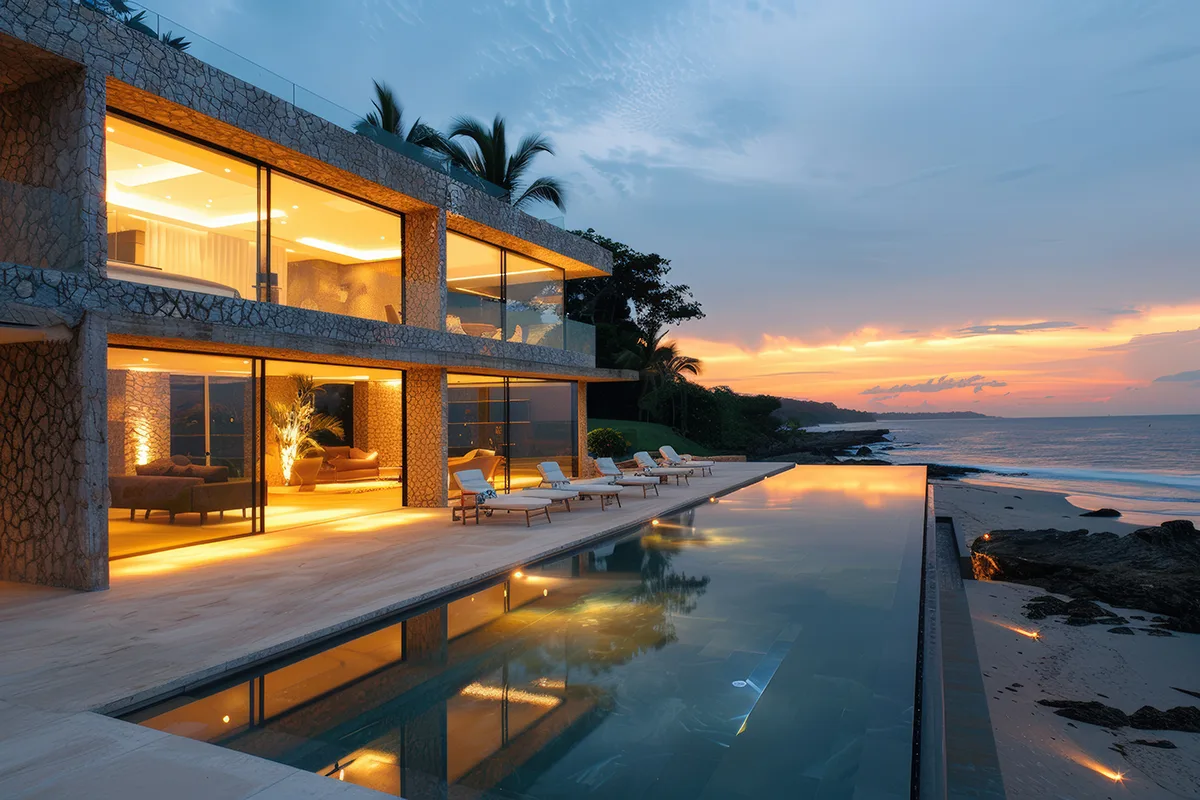
Dubai’s property market has always been a story of reinvention — but its latest evolution is less about building new skylines and more about redefining the city’s most established addresses. Property flipping, once the domain of short-term speculators, has become one of the most sophisticated investment plays in the emirate’s high-end real estate landscape.
As newer developments continue to stretch further into the outskirts, prime areas such as Emirates Hills, Palm Jumeirah, and Jumeirah Islands are witnessing renewed attention from investors who see value not in expansion, but in transformation.
“Dubai’s core communities are some of the most prestigious in the region, but many of their properties are starting to show their age,” says Ben Bandari, co-founder of Highgate Investments. “Today’s ultra-high-net-worth individuals (UHNWIs) are looking for trophy assets – a modern, European-finished, turnkey property that reflects the lifestyle they’re used,” adds fellow co-founder Chris Watt.
Value creation
This new wave of property flipping is less about rapid resale and more about value creation. Investors are identifying older villas in established neighbourhoods, executing full-scale redevelopments with international architects and designers and reintroducing them to the market as ready-to-live, ultra-luxury homes.
For investors, the appeal is clear. Redeveloped homes in prime locations are commanding significant premiums, while buyers benefit from exclusivity and immediacy – avoiding the long timelines associated with off-plan projects.
However, the execution is far from simple. “Many investors want to participate in this segment but underestimate the operational challenges,” Bandari explains. “From sourcing the right plots to managing renovations, brand alignments and market timing, this is not a space for amateurs. It requires an ecosystem of expertise.”
Collaboration at the top end
Specializing in ultra-prime real estate, Highgate has built a model that allows like-minded investors to collaborate on larger, high-value projects in Dubai’s legacy communities – areas that are scarce, desirable and proven.
“Our mission is to simplify the process for investors while elevating the standard of what’s possible,” says Bandari, who works closely with Highgate’s network. “We source undervalued assets, partner with world-class designers and deliver a finished product that competes with, and often surpasses, new developments.”
European craftsmanship, high-end global brands, and bespoke architectural design are at the core of Highgate’s offering. By managing every stage from acquisition to execution and exit the firm ensures both consistency of quality and protection of investor capital.
Driving the turnkey revolution
Dubai’s growing status as a magnet for global wealth continues to fuel this demand. UHNWIs from Europe, Asia and North America are drawn by the emirate’s political stability, favourable tax regime and international connectivity. But unlike the speculative investors of a decade ago, these buyers are seeking immediacy and effortless luxury.
“The new buyer wants to move in tomorrow,” Bandari explains. “They don’t want to oversee a renovation or wait for construction delays. They want perfection now.”
That mindset has placed turnkey properties at the top of the wish list. Homes that are move-in ready, built to European standards, and curated with international design sensibilities are now setting benchmarks in Dubai’s luxury market.
As Dubai’s available land in established communities becomes increasingly limited, property flipping is emerging as a strategic alternative for investors seeking long-term value creation. It’s a trend rooted in scarcity, collaboration and craftsmanship – and it signals a maturation of the city’s property market.
“Dubai has always built for the future,” Bandari concludes. “What we’re seeing now is a return to its past. The reinvention of its legacy neighbourhoods but elevated to global standards of luxury and design.”
In a market where new towers rise by the day, the smartest money in Dubai may not be building further out, but flipping back in.