
The Maldives has long traded on the kind of natural beauty that sells itself. Powder-white beaches, overwater villas and a clutch of ultra-luxury resorts have cemented the archipelago’s reputation as the world’s most photogenic holiday. Tourism isn’t just the Maldivian success story – it is the economy itself. In the first quarter of 2024, the sector accounted for around 25 per cent of GDP. But with that dependence comes fragility, and senior financiers in the country know it.
Nadeem Husain, Chief Executive Officer of Dubai-based MBS Global Investments, argues that the country’s next chapter must be written in capital flows rather than coral sand. MBS is the investment arm of the Private Office of Sheikh Nayef Bin Eid Al Thani, a Qatari royal. “As a financial leader, my focus is not on celebrating the past, but on architecting a resilient economic future for the archipelago,” Husain says. “One built on the robust, modern foundations of global finance and technology.”
It’s a compelling pitch – and one increasingly aligned with the country’s long-term ambitions. The Maldives, better known for honeymooners than hedge funds, is positioning itself as the Indian Ocean’s next financial hub. Not a copy-paste of Singapore or Dubai, but a deliberately future-facing challenger built around digital finance, tokenised assets and a tech-literate regulatory regime.
Covid-19 exposed the vulnerabilities of a single-sector economy. When planes stopped landing, revenues evaporated almost overnight. Even now, as arrivals recover strongly, Husain sees worrying trends: falling average length of stays and softer per-head spending. These aren’t panic signals, but they are pressure points – and diversification is no longer optional.
Interestingly, the country already has a relatively sturdy domestic financial system. Banks and insurers remain well capitalised, with the banking sector’s total assets reaching MVR 95.1 billion by late 2024. Its risk-based capital ratio stands at a healthy 54 per cent – far above regulatory minimums. In other words: the plumbing is in place. What’s missing is scale, ambition and global relevance.
That’s where Husain’s firm enters the frame. MBS Global Investments has committed US$8.8 billion to the Maldives, underlining its conviction that the country can leapfrog legacy systems and build something natively digital. “The focus is to move beyond traditional banking and pivot the country into a future-facing financial jurisdiction,” he says.
Banking on blockchain
The big idea? Tokenisation. Around the world, the financial sector is shifting towards blockchain-based representation of real-world assets (RWAs) – everything from real estate to commodities to debt instruments. Analysts expect the RWA tokenisation market to run into the trillions within a few years. Most jurisdictions are reacting to the trend. The Maldives wants to lead it.
It helps that the country isn’t weighed down by decades of regulatory legacy. Its size, governance structure and appetite for innovation position it to build a clean, transparent, and investment-friendly framework purposely designed for DeFi, digital securities and new asset classes. Offering clarity – something most countries are still struggling with – could prove a significant competitive advantage.
The plan is to attract global fintechs, asset-management firms and digital-nomad professionals with a mix of incentives and certainty. In a region competing fiercely for talent and capital, speed matters. So does credibility. The Maldives wants to be the jurisdiction where innovators feel not only welcome, but understood.
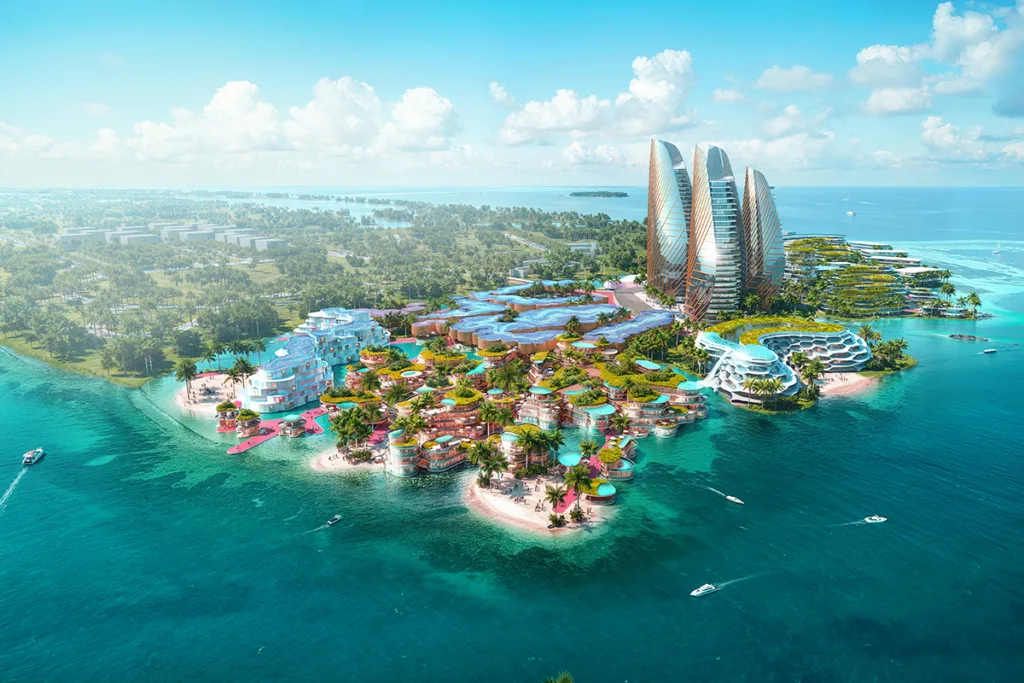
A financial centre with sea views
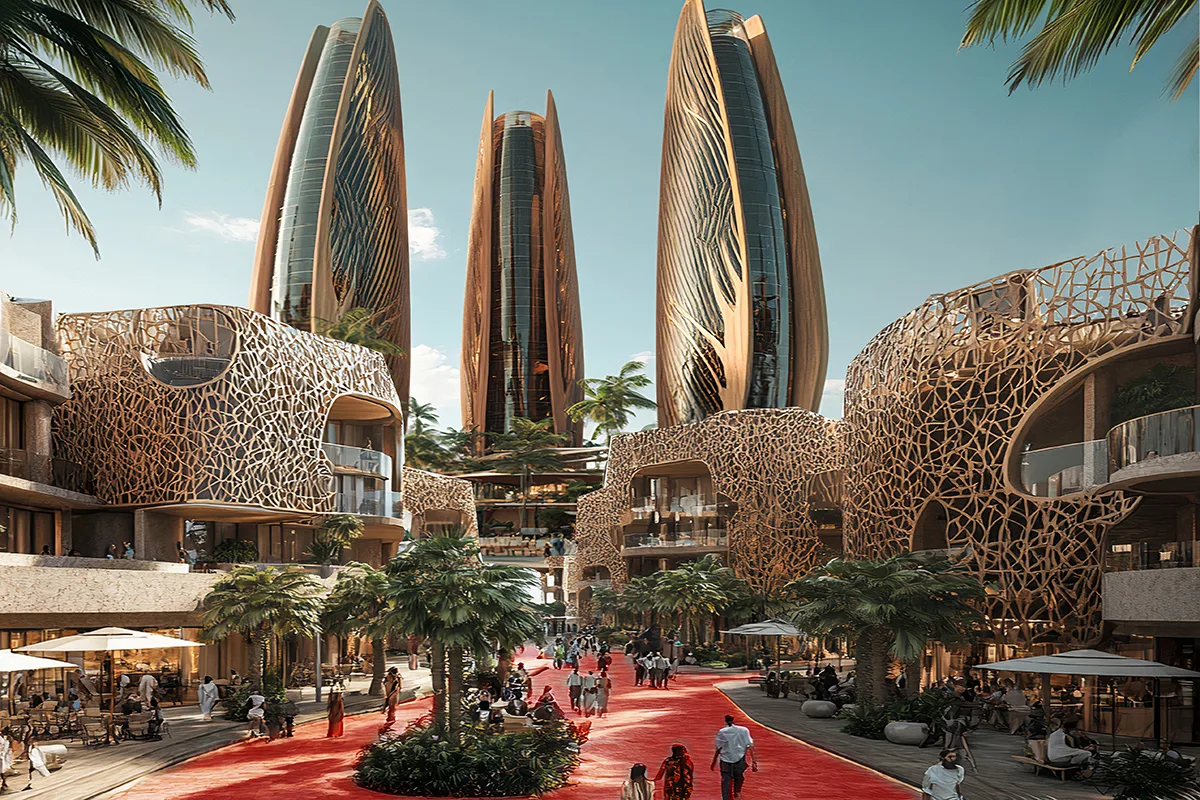
Of course, a hub is more than regulation and low taxes. It needs to be a place where international professionals want to live, work and invest. Enter the Maldives International Financial Centre (MIFC), designed by renowned architect Gianni Ranaulo.
Rather than a cluster of glass towers, MIFC is imagined as a destination: part global business district, part lifestyle enclave. Think high-end residences, luxury hotels, an international school, cultural venues and climate-resilient infrastructure – all threaded together with oceanfront views. The project’s sustainability credentials run deep, from a car-free upper level to heavy reliance on renewable energy. It’s the type of environment that aligns neatly with ESG-focused institutional capital, for whom climate resilience and long-term planning are no longer optional extras. Husain frames it as building not just for the Maldives, but a model city for the century ahead. A model micro-city where business, well-being and sustainability coexist rather than compete.
“We have designed MIFC as a holistic destination that combines world-class business facilities with a curated lifestyle experience,” he explains. “By linking the financial future to principles of sustainability and well-being, MIFC is not only building a financial centre for 2030 but designing a model city for the 21st century.”
It’s an ambitious claim – but then, so is turning a tourism paradise into a finance powerhouse.
A new economic pillar
Beyond the grand designs lies the economic rationale: resilience. The World Bank has repeatedly flagged the Maldives’ exposure to external shocks. Building an entirely new growth engine could change that calculation dramatically.
Husain outlines the strategic objectives clearly:
Attract FDI – drawing high-value capital into a sector that isn’t weather-dependent.
Foster human capital – creating jobs in fintech, blockchain engineering, investment management and advanced financial services. Diversify revenue – generating a stable new income stream for the state, reducing reliance on tourist arrivals. Importantly, this isn’t a rejection of tourism. Rather, it’s a recognition that even a star performer shouldn’t be left to carry the entire economy. As Husain puts it, “The Maldives is no longer only selling paradise, it is offering participation in a high-tech financial future.”
Middle East lessons
The Maldives is taking a page from the GCC’s own diversification playbook: build world-class infrastructure, create business-friendly regulation, and lure global talent through quality of life and tax advantages. The UAE did it with logistics, aviation and finance. Saudi Arabia is doing it with mega-projects and re-industrialisation. Bahrain and Qatar have carved out niches of their own.
For Middle Eastern investors, the Maldives offers both geographical proximity and first-move opportunity. A financial hub in the Indian Ocean also complements the region’s east-west trade corridors. And with many GCC economies already heavily invested in digital assets and fintech, a like-minded jurisdiction could become a natural partner.
Transformations like this don’t come around often. The Maldives has a narrow window: the global race to regulate, host and monetise digital finance is accelerating. Its advantage lies in agility and narrative. Few places on earth can offer both natural beauty and regulatory blank canvas. Even fewer can pitch themselves as both a tourist’s escape and an innovator’s sandbox.
Whether it succeeds remains to be seen, but one thing is clear: the world won’t just be watching the Maldives for its sunsets anymore. It’ll be watching for its next move in the global financial arena.