
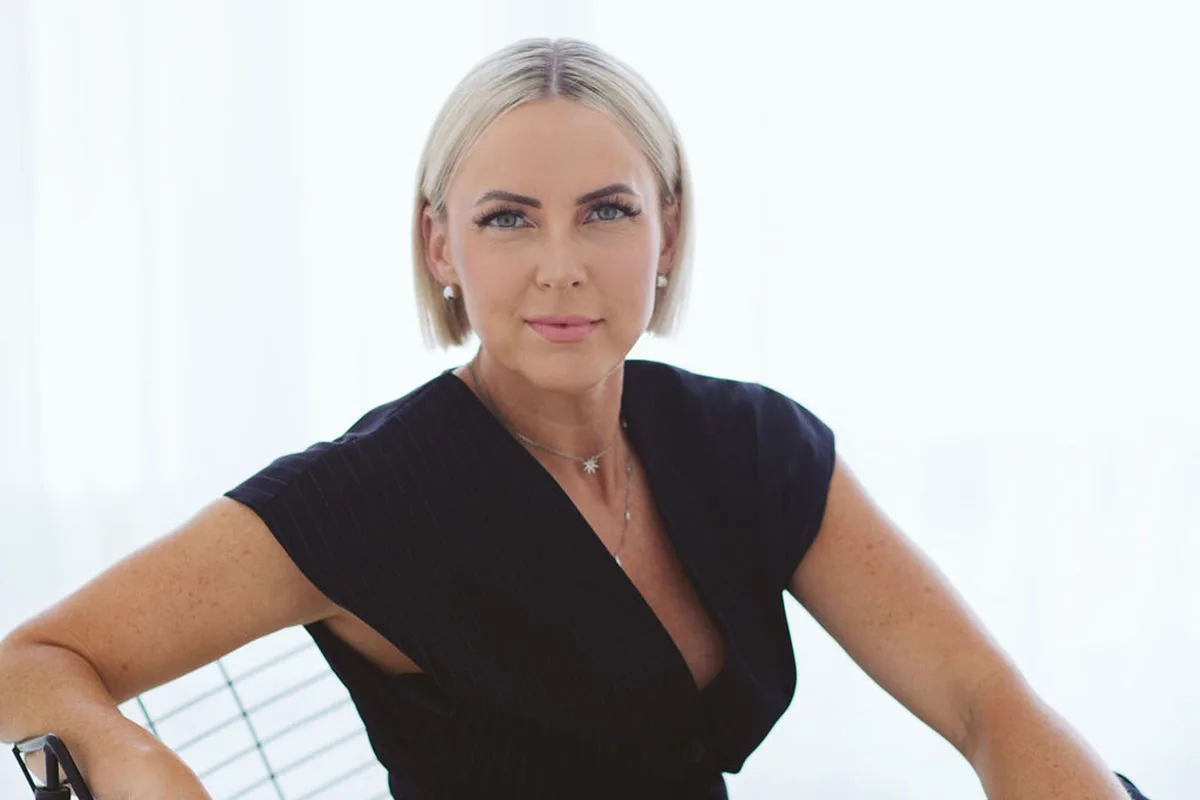
The former celebrity stylist has a message for executives who still underestimate the value of their personal brand: “People still think personal branding means shouting from the rooftops, ‘Look at me!’ But personal branding isn’t self-promotion. It’s the strategic process of shaping how you’re perceived, so the right opportunities and partnerships find you.”
She believes many CEOs only realise the importance of this once it’s too late. “They wake up when they’ve been passed over for a role, lost a deal to a more visible competitor, or discovered their expertise isn’t being recognised. By that point, they’re playing catch-up.”
“Your company brand is what you deliver. Your personal brand is why and how you deliver it.” Kelly often encounters leaders who fear that personal visibility might overshadow their organisation’s brand. She insists the two should be complementary, not competitive. “Think of it this way,” she explains. “Your company brand is what you deliver. Your personal brand is why and how you deliver it. They should strengthen each other.”
Expert, not advert
Her advice is practical: “If you’re the founder, lean into your origin story and your mission. If you’re a CEO brought in to scale, talk about transformation and growth. And when you’re posting online, stick to the 70/30 rule – 70 per cent thought leadership and industry insight, 30 per cent company-specific. That keeps you positioned as an expert, not an advert.”
Before Kelly starts shaping any leader’s personal narrative, she conducts a forensic brand audit, using AI. “Yes, we check Google and LinkedIn,” she says, “but I also run the client’s name through ChatGPT and other AI tools. AI is now shaping perception, so it’s important to see what it ‘knows’ about you.”
Then comes a deeper analysis: surveying colleagues, clients and peers about how they see the individual. “We ask: What five words describe this person? What are they known for? What would you hire them for? Where are the gaps in their brand?”
The comparison between self-perception and external perception can be revealing. “Someone might think they’re seen as innovative and bold,” she says, “but their network describes them as reliable and methodical. Neither is wrong but if they want to be known as a disruptor, that gap is costing them opportunities.”
“Facts tell, but stories sell”
Kelly’s most consistent advice for leaders? Tell better stories. “You don’t have to be everywhere,” she says. “Just show up consistently where you’re strongest. If you’re a natural storyteller, write a newsletter. If you thrive in conversation, do podcasts. If you can distil ideas fast, short-form video is perfect.”
But whatever the format, she insists on one golden rule: “Facts tell, but stories sell. The CEOs who can take a business lesson and wrap it in a human story are the ones who connect. That’s how you become memorable, not just visible.”
She also warns against confusing volume with value. “One powerful post a week beats daily mediocrity. Focus on quality, not quantity.”
“AI can help you, but it can’t be you”
In an era when ChatGPT can draft posts faster than most communications teams, Kelly urges CEOs not to outsource authenticity.
“The biggest mistake I see is leaders letting AI do all the talking,” she says. “AI can help you articulate ideas more clearly, but it can’t replicate experience or emotion. The future isn’t human or AI – it’s human and AI.”
When asked who’s mastered the art globally, Kelly doesn’t hesitate. “Simon Sinek is the gold standard. He’s built an empire around one idea: Start With Why. Everything ladders back to that. That’s clarity.”
“Gary Vaynerchuk is another. Love him or not, his authenticity is consistent across every platform. You always know what you’re getting.” And closer to home? “Huda Kattan,” she smiles. “She’s proof that you can build a billion-dollar brand and still stay visible and relatable. She didn’t retreat into the boardroom; she kept showing up—wins, failures, everything. That’s real leadership.”
Who’s getting it wrong? Kelly laughs before answering. “Elon Musk. He’s a visionary, no doubt. But his personal brand has become chaotic—at times damaging to his own companies. If he could pivot from unpredictable disruptor to transformational builder, imagine the influence he’d have.