

For those unfamiliar, how would you describe TOMS?
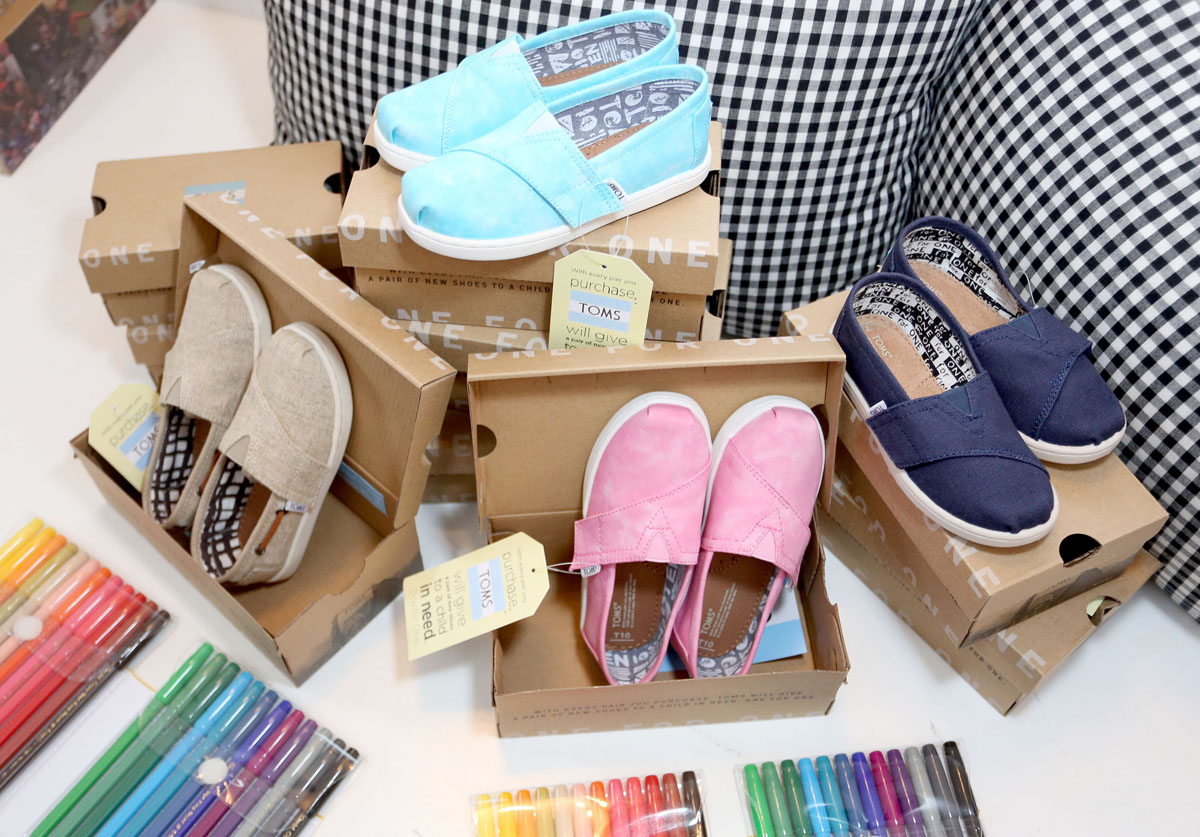
While travelling in Argentina in 2006, TOMS founder Blake Mycoskie saw the hardships faced by children growing up without shoes. Wanting to help, he created TOMS, a company that would match every pair of shoes purchased with a new pair of shoes for a child in need. It was called one for one.
What started as a very simple idea has evolved into a powerful business model. Realising that the concept of one for one could serve other basic needs, TOMS has now launched other products, including eyewear, bags and a backpack collection. In keeping with the company’s promise, purchases of these products also help improve the lives of people in need.
Helping to restore sight, for example, providing safe water, supporting safe birthing practices and aiding bullying prevention and response programs. Ultimately, TOMS is in business to improve lives.
If the founder is named Blake, why is the brand called TOMS?
It’s short for the tomorrow’s shoes project. We named the company this with the belief that when someone buys a pair of shoes today, a child in need will receive a pair of shoes tomorrow. So it’s ‘tomorrow’s shoes’, which was eventually shortened to TOMS.
So corporate responsibility is a big deal for the company.
It’s at the very core of everything we do here. Giving and selling are inextricably connected for us. There are many ways a corporation can be socially responsible, and at TOMS we focus on Giving as the most important thing that we do.
When you look at it that way, our entire giving model is corporate responsibility, where we create value for our giving partners and the beneficiaries of our products.

The main product that most will be familiar with is the Alpargata. What’s the story behind that?
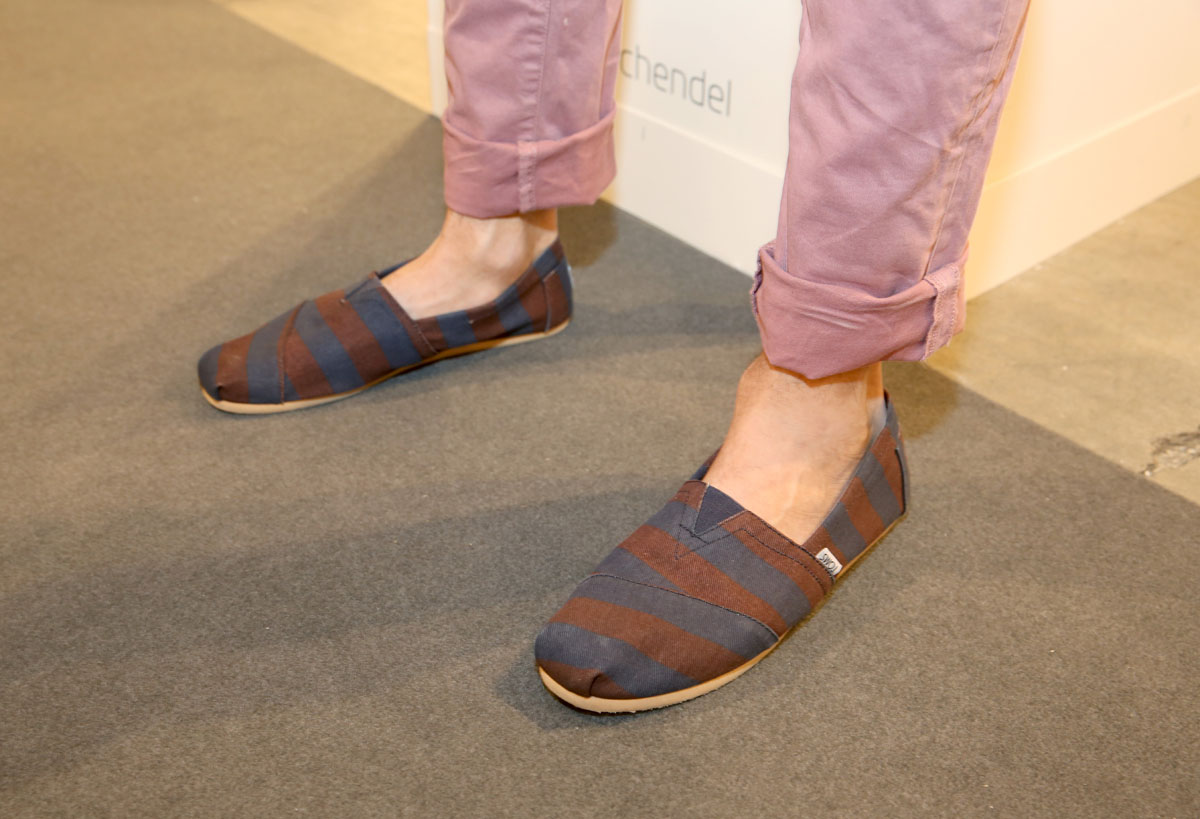
The Alpargata is a traditional shoe. It has been around for hundreds of years, and is worn by Argentinian locals and farmers. When Blake travelled to Argentina all those years ago, he fell in love with the simplicity of the design, and the comfort of the shoe.
He felt it was a unique product to develop and bring to the US market, and I completely agree. The heritage of our giving story is so closely bound to the heritage of our product. It’s really ideal for us as a business.
Some people might say that a ‘giving’ strategy doesn’t help the bottom line. What would you say to naysayers?
That I completely disagree. I believe our strategy is the biggest reason for our commercial success.
Sharing our authentic story enables us to be more effective at selling our shoes, which in turn enables us to give more shoes to those who need them. This virtuous cycle is at the very foundation of TOMS, and is key to our success in future.
TOMS is a relatively young company, but its growth has been stellar. Why do you think that is?
I believe our purpose resonates with our customers. Ultimately, that leads to a deep emotional connection with those customers, which translates in to success.
You’ve worked for many different companies in many different industries – Nestle, Starbucks, T-Mobile. Are there any transferable sills that translate in to what you do now, fashion?
I am a people person first and foremost. I firmly believe that in each of the companies that I have worked, they are most successful when they focus on the people aspect of the business.
Listening to employees needs and desires, and then responding accordingly, is key.
What makes a good CEO?
In my opinion, the best CEO’s are servant leaders, who recognise that the best way to serve their shareholders and board is to focus on serving the organisation, and the customers.
In doing so, they are best able to create long-term value for everyone involved.
Some of the biggest minds in business believe in failure. Doing something wrong should not be chastised, but celebrated – as it demonstrates how a task or project can be done better in future. Would you agree with that thinking?
Absolutely. Failing gives a leader a chance to learn from experience. Failure also gives a leader the chance to realise that just because something doesn’t go their way, it’s not the end of a journey.
It is just a single point in a very long timeline. How you respond to failure says more about your leadership than the failure itself.
Ultimately, if you are afraid to fail, you are set on an even more dangerous path. Embracing risk taking is the key to innovation, after all.
What’s the toughest decision you’ve ever had to make in business?
The decisions that cost me the most amount of sleep are those that directly impact people and their livelihoods.
I know that you should never retain people or businesses that are pulling down the company, however, letting them go is still difficult. For me, the most difficult was having to close seven call centres at a previous company, which impacted thousands of people.
We did all we could to help people with that transition, but it was still an extremely difficult (yet necessary) experience.
Some people believe in leading by example and setting the pace for the company. Others encourage their staff as a collective. What type of leader are you?
I try to be a good role model and developer of people. Ultimately I have come to recognise that I have been able to deliver the best results in my roles when I am surrounded by a strong team that shares a common purpose.
What qualities do you look for in a team?
I look for a specific attitude. People who understand that by focusing on the success of the entire team that leads to individual success.
Those who are only focused on individual success typically hinder both, and achieve neither.
What’s one business book that you would recommend?
I really enjoyed The Servant as Leader by Robert K. Greenleaf. It’s an essay that describes the characteristics of servant-leaders, with examples.

But it’s not all about business books – I’ve recently enjoyed Boys in the Boat, about the crew team that wins a gold medal in the 1936 Olympics.
It’s not just about business, but it does carry with it a great team message.
Do you have any daily rituals?
I exercise every day. Most importantly, I always find time to spend with my wife of 25 years – even if I am travelling, I make sure we spend some time talking on the phone. I end each day with a period of reflection, and some reading.
What does a regular day look like for you?
I’m up quite early – usually 5:30am – for some quick exercise and then I ride my bike to work along the beach in LA (it’s about 10 miles).
Every day seems to vary for me, but I spend the majority of my time in meetings with my team, our customers or our business partners. That’s usually done by late afternoon, and then I spend about an hour catching up on my email. I do this all in one go, as I prefer not to be distracted by email when I am meeting with people – it just feels rude to me.
Before leaving the office, I plan out my work and to-do list for the next day, and then jump on my bike and ride home. Usually, I’m home for 6:30pm to spend time with the family.