
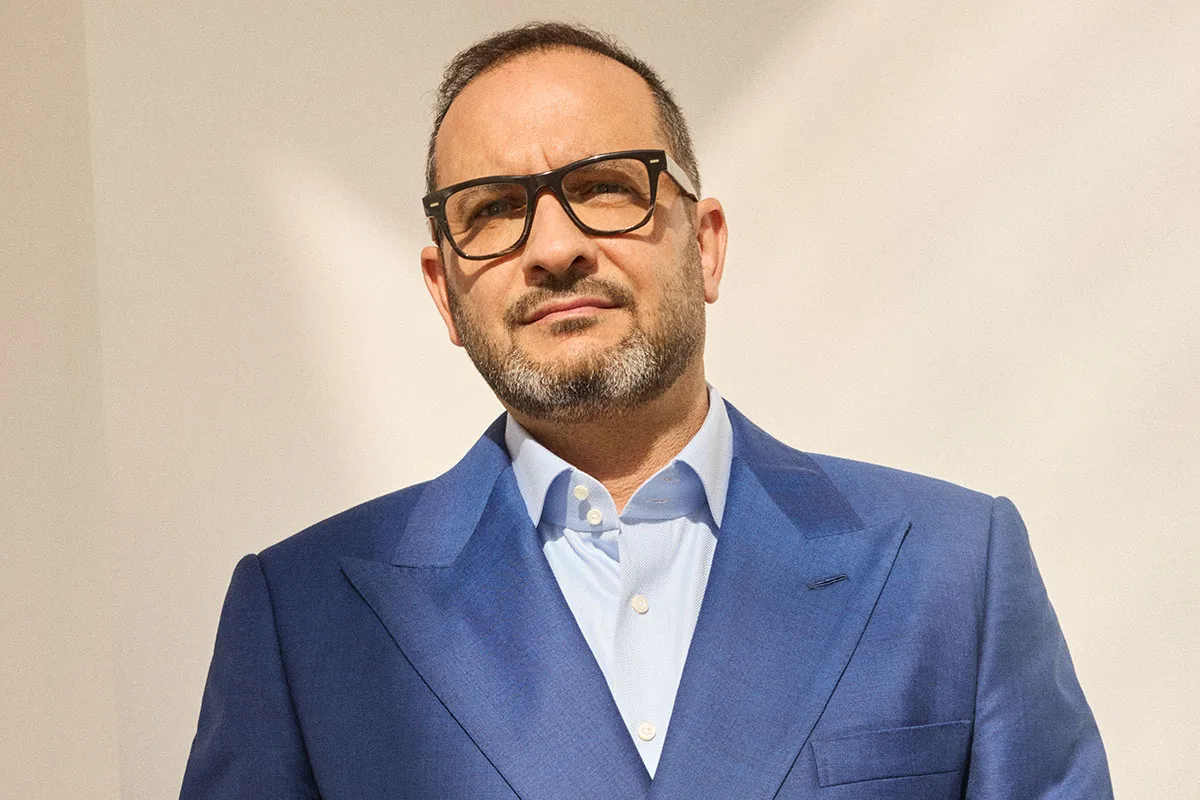
Twenty years ago, the idea of holding multiple residencies and passports belonged to a niche group of ultra-wealthy individuals. Today, it is one of the defining investment trends of the new affluent class. Few have had a closer view of its evolution than Armand Arton – CEO and founder of Arton Capital, or Chief Global Citizen as he prefers to be called. He is one of the most influential voices shaping global citizenship policy today.
From advising governments on investment frameworks to helping Ultra High Net Worth (UHNW) families future-proof their mobility, Arton’s vantage point spans wealth management, migration strategy and geopolitical risk. “I would say everybody is a global citizen today,” he says. “Everybody needs or should consider having more than one residence or citizenship if they can afford it.”
Arton Capital specialises in citizenship and residency by investment, and creating global mobility strategies for high-net-worth individuals and families. When he launched the company two decades ago, the typical client profile was narrow: a male in his 60s, usually Asian or Arab, worth between $1 and 5 million, seeking to relocate to Canada, the US, or the UK. That profile has been completely rewritten.
“Today, the average age is below 50. The nationality mix has shifted. And the average net worth exceeds $30 million,” Arton explains. “We have clients at $5 million and clients at $50+ billion. The gap has widened significantly.”
These clients are not relocating in the traditional sense. Few uproot their families. Instead, they are acquiring passive investment routes to residency and citizenship – strategic mobility tools that sit within a wider wealth portfolio.
For them, the appeal is simple: freedom. The ability to move, invest, shelter and secure the future for the next generation regardless of political shifts, regulatory tightening or global crises. “Freedom today is the most valuable asset they have in their portfolios,” he says.
Portfolio of passports
Arton’s process begins with a detailed investment policy statement: age, liquidity, family structure, mobility needs, tax planning and residency requirements. Clients are then presented with a tailored shortlist from a range of roughly 25 options, potentially having three or four different programmes.
“Like a balanced or growth portfolio, people today build mobility portfolios,” Arton says. “A Caribbean passport, a European residency, and a UAE Golden Visa is one of the most popular combinations.” And the underlying driver is urgency.
The most misunderstood aspect of global mobility is its volatility. The rules can change suddenly. “What people applied for 20 years ago is no longer available today,” Arton says. “Things get more expensive, more complicated. My recommendation is simple: don’t wait.”
He cites Canada, where investment thresholds tripled, language requirements were introduced, and naturalisation timelines lengthened from three years to five. In the Caribbean, contribution thresholds across programmes jumped from $120,000 to $250,000 almost overnight. Europe has closed multiple citizenship-by-investment programmes, and others are tightening residency rules.
Portugal is a prime example. Applicants who were promised citizenship after five years now face a potential 10-year wait due to legislative changes. “This is why clients secure Plan B, Plan C, Plan D,” he says. “In case one door closes, they already hold another key.”
Dubai: The new global magnet
Amid this shifting landscape, the UAE has emerged as one of the world’s most powerful magnets for wealth, talent and mobility-driven investors. “Zero personal tax, high quality of life, safety, opportunity – it’s extremely attractive,” Arton says. “We saw a large number of wealthy individuals leave the UK after the non-dom cancellation. Many came here.”
The UAE’s Golden Visa system, once tied strictly to real estate investments, has expanded dramatically. Influencers, educators, scientists, green-energy experts, and high-level business leaders can now be nominated without making capital investments. Powerful networks such as the Young Presidents’ Organization (YPO) and Tiger 21 have become pipelines for Golden Visa nominations, with thousands of members already approved.
As for citizenship, it remains rare, invitation-only, but growing. “We’re seeing more entrepreneurs being granted UAE citizenship because of their contribution,” he says.
Arton predicts that the GCC will eventually harmonise benefits across its six nations. With a unified tourist visa already announced, a unified Golden Visa is, in his view, the next logical step. “It would allow holders to work across all GCC countries. That is the mid-term plan.”
Mobile-first
Global citizenship is no longer a quiet planning tool – it reacts directly to geopolitical shocks. During the pandemic, American demand surged for the first time in the industry’s history. “They discovered their passport didn’t get them into Europe. It was a complete awakening,” Arton says. Wealthy families scrambled for EU residencies so they could reach their homes in Italy or France.
Election cycles have also become catalysts. Arton’s firm now runs pre- and post-election surveys, ‘The Affluence and Elections Survey’, across G7 nations, asking millionaires whether they would relocate if a particular party won. The survey was recently recognised in several awards categories, winning Gold at Communicate magazines Corporate & Financial Awards. “People are polarised. And they are mobile,” he says.
The Russia-Ukraine conflict triggered a flight to safety across Eastern Europe. The China-Taiwan tension triggered a spike in Southeast Asian demand. And conflicts in the Middle East continue to shape mobility decisions for entire demographic groups. “When war starts, it’s too late,” he says. “You cannot get documents. You cannot apply. Mobility needs to be secured before a crisis hits.”
Governments need mobility too
Unlike popular perception, global citizenship is not simply a service for the wealthy. It is a strategic economic engine for governments. Arton spends 80 per cent of his time advising countries, from the Caribbean to Africa to Europe, on policy design, financial instruments, and anti-money-laundering frameworks.
“Countries need this industry as much as people do,” he says. “Botswana, for example, is heavily dependent on diamonds. Prices have dropped around 40 to 50 per cent. They need to diversify.” Citizenship and residency programmes can create new sovereign wealth funds, job creation pipelines and help develop tourism among their many benefits.
But impact must be measurable, he stresses. “If the money just goes into a general budget, it’s not meaningful. Our model is 3x: one investment must transform at least three local families’ lives.” Grenada, Antigua and St Lucia already map investment programmes to specific community projects. Botswana is launching a fund dedicated to affordable housing and hospitality-sector training.
Giving back
For Arton, global citizenship is not only commercial – it is personal. His family has experienced every form of migration across four generations: Armenian refugees fleeing genocide, Bulgarians relocating for education, and his own journey to Canada with just $4,000 and four suitcases.
His early trauma of crossing borders as a child – facing suspicion, multiple visas, and the precariousness of nationality – shaped his mission. “When I got my Canadian passport, everything changed. Suddenly, I was welcomed. I realised how deeply access shapes opportunity.”
This personal history led to the creation of the Global Citizen Forum, a philanthropic platform connecting wealthy migrants with refugee communities. “Being mobile and free should inspire you to help those who aren’t,” he says. Their events bring together thought leaders, philanthropists, refugees, and global citizens to discuss mobility as a human right.
Wealthy migrants, Arton notes, tend to be more philanthropic than those who never leave their home countries. Exposure to inequality sharpens their awareness of global disparities. “Multiple passports create broader responsibility,” he says. “They see the world – and they give back to it.”
Digital transformation
One of Arton’s biggest innovations is the Passport Index, the most widely used mobility database in the world. Initially built as an internal tool, it now receives millions of monthly interactions and is used by governments, border agencies and travellers globally.
It tracks visa-free access, mobility scores and bilateral agreements, updating daily across four data streams. It was also one of the first platforms to predict the decline of paper visas. “I think by 2030, there will be no more paper visas,” Arton says. “Everything will be e-visa or ETA.”
His goal is to transform the Passport Index into the world’s first visa-application marketplace, acting like a secure mobility wallet. Much like PayPal stores your payment details, the Passport Index will store verified identity data to auto-populate visa applications across more than 180 countries. “It will simplify travel, reduce fraud and connect governments with travellers in a trusted, digital ecosystem,” he says.
Passports themselves, he predicts, will shrink, with fewer pages needed because there will be no stamps, eventually evolving into biometric cards. But physical documents will survive. “Some blocks like the EU, GCC, or North America may go passport-less internally, but globally? Not in our lifetimes.”
And as mobility becomes more digital, more automated, and more democratised, the global citizenship industry will shift from niche to mainstream – influencing economics, philanthropy and geopolitics far beyond the UHNW world.
Arton describes his transition from finance to mobility with disarming clarity: “I always wanted to be a stockbroker. Today I trade freedom. It is more valuable than anything else.”