
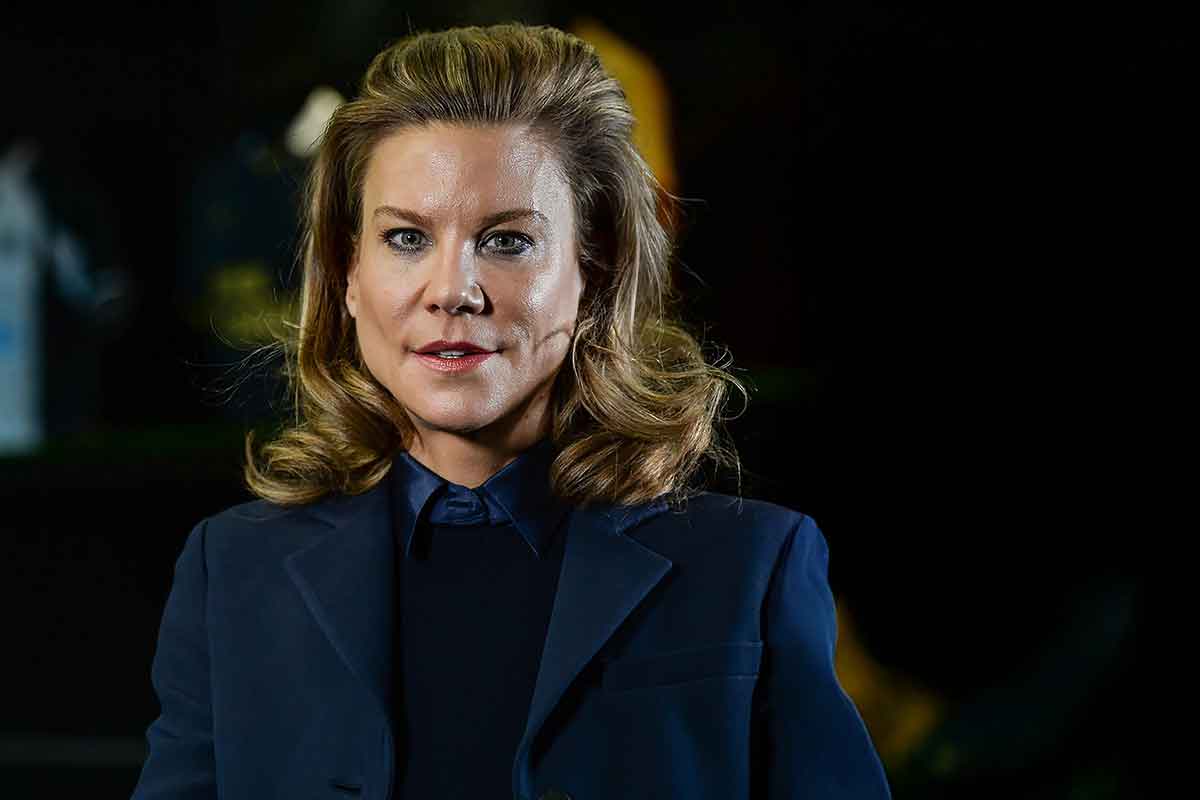
British financier, deal-maker and sports investor Amanda Staveley played an integral role in the takeover of Newcastle United FC by Saudi Arabia’s Public Investment Fund (PIF).
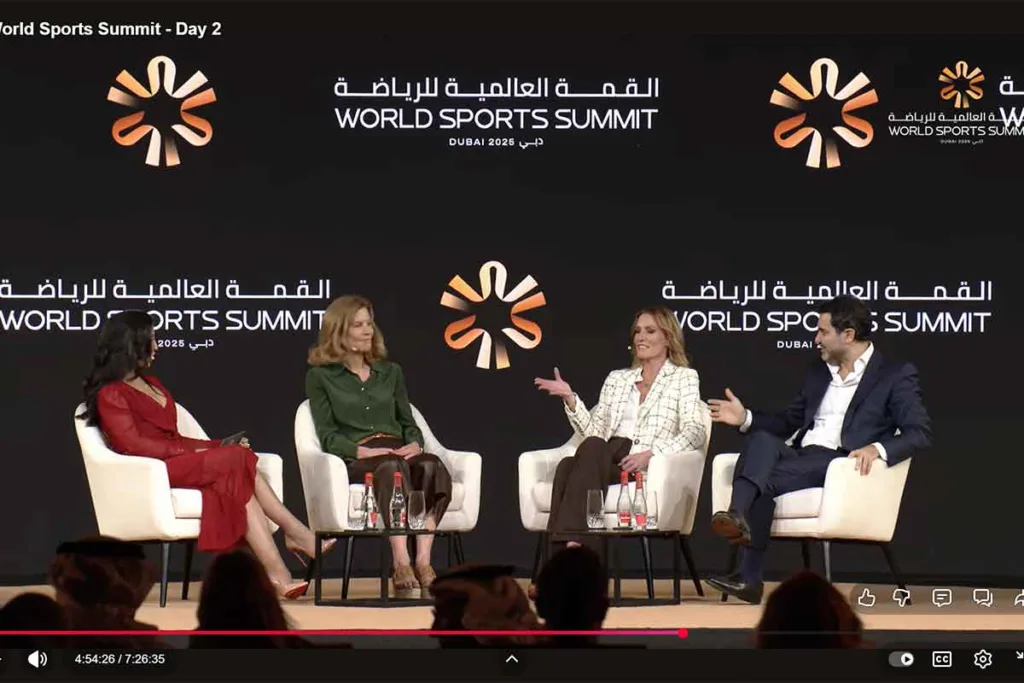
She stayed onboard and finally exited in July 2024 along with her husband Mehrdad Ghodoussi who were co-owners. A few months ago, Staveley and her investment firm PCP Capital Partners were linked to a bid to buy Premier League club Spurs. After her successful football foray with Newcastle, Staveley, a Dubai resident, may want back in to the exciting world of football. She talked about the Newcastle deal and investing in sports clubs at the World Sports Summit in Dubai recently.
For many global investors, the Premier League’s biggest strength is also its greatest deterrent: relegation. The risk of a club being relegated to a lower division makes English football different from major American sports which operate a closed system of no relegation. On a panel, called Leading the Charge: Investors Revolutionizing Sports Business, the “football power couple” of Staveley and Ghodoussi were joined by Mary Owen, former owner of NFL franchise the Buffalo Bills. Staveley said: “The fundamental difference between the Premier League and the NFL is relegation.
“The NFL is a closed shop so it’s easier to attract capital and you’ll probably get higher valuations.” In England, the stakes are far higher. “A lot of my American friends say, ‘I just can’t get on with this idea of being relegated,’” she added. “But actually, that jeopardy is part of the charm.”
Drama and discipline
For Newcastle United, that jeopardy shaped every early decision. When the new ownership arrived, Newcastle was fighting at the bottom of the league table. Staveley said relegation pressure forced discipline rather than excess. “To provide the best football, we needed to build the business from scratch. There wasn’t the infrastructure in place – but it was a great club and a great brand.”
Despite the risks, the pair believe relegation is what gives English football its global pull. “Without jeopardy, you lose something. It creates drama, competitiveness, and meaning.”
That balance between financial risk and sporting consequence ultimately defined Newcastle’s rise, to the joy of its supporters. As Ghodoussi put it: “You should never lose sight that you’re a custodian of these clubs. Ownership sits with the fans.”
Why football?
Ghodoussi said the pair saw an opportunity with a change in the way people viewed sports, and the monetisation of it. “From sports being an investment where very wealthy people put their money, it started to change into a real asset class.” They began to see a lot of American money flowing into European football, particularly into the Premier League.
“For us, it was this dislocation in pricing. You saw these valuations in the U.S, which were much, much higher and then you looked at Europe and the Premier League and they were much narrower.” It was at this point that Staveley and Ghodoussi knew that they wanted to be principal investors in sports.
“It’s an asset class and the monetisation is there. Sports is content, and content is the monetisation of sports. And that’s where our journey started.”
Buffalo Bills
Former Buffalo Bills owner Mary Owen used her appearance at the World Sports Summit to offer a rare first-hand account of how one of America’s most valuable sports leagues was built, long before billion-dollar valuations became the norm.
Owen explained her own involvement along the franchise’s origins, explaining that the Bills were founded in 1959 by her uncle, Ralph Wilson Jr.
He was part of a group who started what was called the AFL, which forced a merger with the NFL. At the time, the group were known as the “foolish club” for challenging the established order.
“They were businessmen with a love and passion for American football,” Owen said, adding that sustained pressure over a decade ultimately reshaped the sport’s commercial future.
Owen formally joined the Bills ownership in 1997 while still at university, during a pivotal period for the NFL. “That was also right after Fox came in with a new broadcast network,” she said, noting how media rights accelerated franchise values and league growth.
Reflecting on ownership, Owen stressed the importance of long-term commitment and community. She pointed to Buffalo’s famously loyal supporters, known as Bills Mafia, as a defining asset during years without on-field success.
Fans, she said, “stuck with us, came to games, even when we were not winning.” Her remarks offer a reminder that today’s global sports empires were built on patient capital, media innovation and deeply rooted fan cultures.