
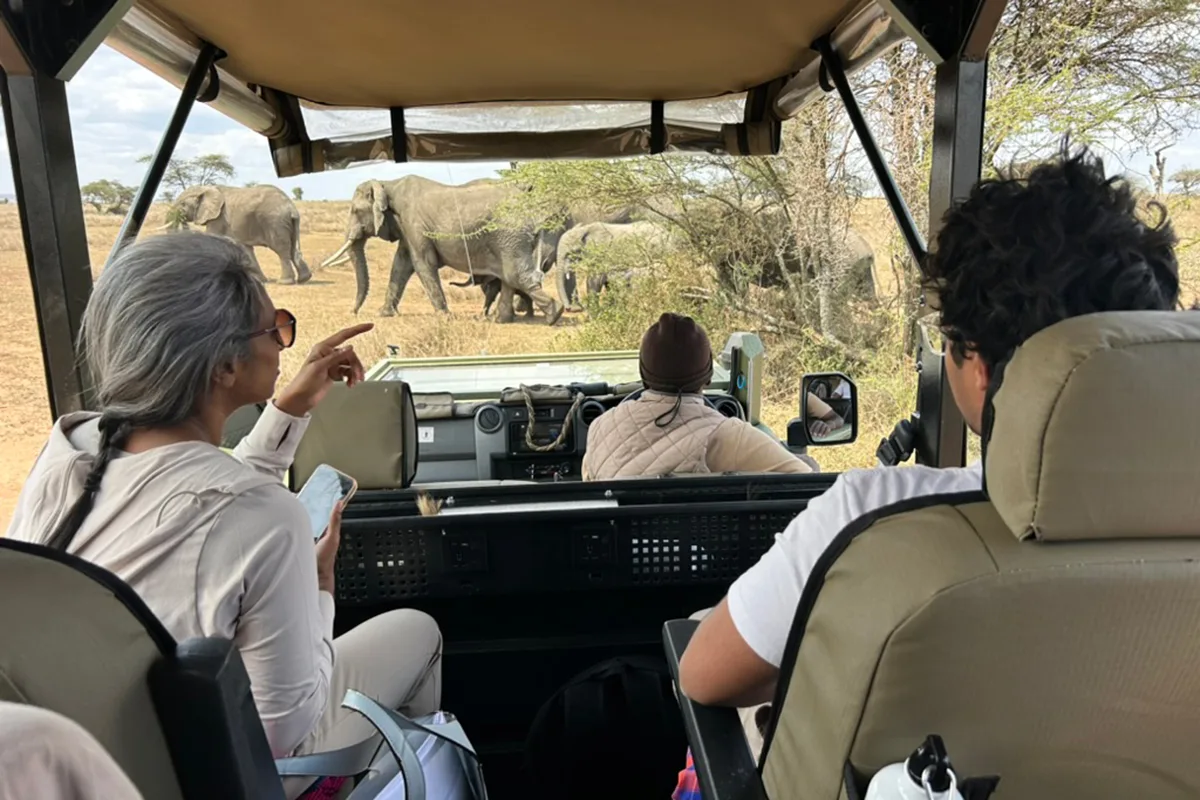
A front-row seat to the greatest wildlife show on earth
There’s nothing quite like driving around the Serengeti in an open-top jeep with your family on the lookout for wildlife – a herd of elephants, a dazzle of zebras, or even a live kill from the many big cats that call this savannah their home. It is one thing to watch nature documentaries from your sofa; it is another to feel the wind on your face as you bump along ancient migration routes, the horizon stretching endlessly ahead, knowing that anything – absolutely anything – could appear at any moment.
A safari had been on our bucket list for years but we had never found the right time to go. November 2025 had been pencilled in for months and not even civil unrest in Tanzania and a tourist warning could deter us. Our safari adventure began in the metropolis of Dar es Salaam, a brief stop before the real excitement.
After a night in the bustling city, we boarded a small bush plane and flew north toward Lake Manyara, where the landscape shifted from coastline to crater highlands. The itinerary placed our first two nights at Lemala Ngorongoro tented camp on the rim of the Ngorongoro Crater, giving us an early-morning advantage into one of Africa’s most extraordinary wildlife concentrations.
Real-life documentary
Even before the crater descent, the journey itself through misted forests, rolling hills and Maasai land felt cinematic. Ngorongoro is a geological phenomenon: an ancient caldera whose 260-square-kilometre floor now thrives as a self-contained ecosystem. Within minutes of descending, we were surrounded by animals that seemed entirely unfazed by the presence of our vehicle – a Toyota Land Cruiser with a pop-up roof.
Gazelles grazed in thick clusters, zebra dotted the plains like brushstrokes, and in the distance, a rare black rhino appeared as though painted into the landscape. But nothing compared to the lions and lionesses – muscular, relaxed, and very much in charge. We felt like Sir David Attenborough, but without the husky commentary.
Returning each evening to the Lemala camp, we were greeted with smiles, hot tea and questions about what we saw on our drive. It’s cold up in the mountains, especially when you are used to Dubai weather. To help deal with this, you can enjoy hot water bottles tucked under your duvet, crackling campfires and staff who will happily make you hot chocolate drinks. While this is safari glamping, be prepared for a few hardships – hot water can run out fast. And don’t be worried at night if you hear animal noises and shuffling hooves. The camp is purposely built on a pathway animals use at night-time. Elephants and zebra routinely wandered through before dawn.
Lemala’s Ngorongoro camp is rustic in the best possible way – canvas tents, warm duvets, solar lanterns and an atmosphere that balances comfort with authenticity. Our private outdoor dinners, set up just for the four of us, became nightly rituals. Lanterns glowed in the darkness, and the sounds of the forest – distant hyenas, rustling grass – became the soundtrack to conversations that only safaris seem to inspire.
By the time we boarded our bush plane again, this time bound for the Central Serengeti, we were already in the rhythm of safari life: early wake-up calls, steaming mugs of coffee at dawn, and the thrill of never knowing what the day would bring.
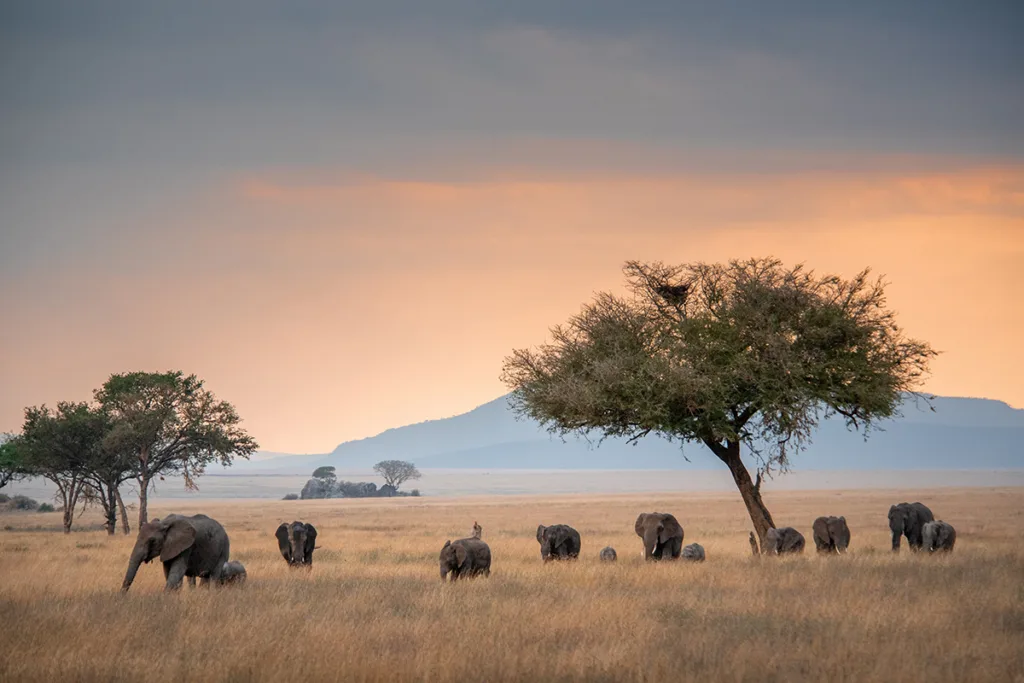
Landing in the Serengeti is like stepping into a wildlife documentary – but in high definition. The sheer scale of the plains is overwhelming. The Seronera Valley, where Lemala Ewanjan camp is located, is known for its abundance of resident big cats, and it lived up to every promise. But it was the elephants that were the first to greet us – a large herd moving in near-perfect formation across the grasslands. Watching them from behind, with their gentle swaying steps and protective choreography around their young, felt like witnessing a family on its own journey. Their presence was grounding, even humbling.
Then came the leopard. Camouflaged high in the branches of an acacia tree, it lounged over the remains of its kill. The elegance of the animal – its dappled coat, its effortless balance, its quiet authority – contrasted sharply with the raw reality of prey it had just killed. Two cheetahs ravaging on a young gazelle remind you this was nature in its purest form: beautiful, brutal and honest.
We also got to witness the Great Migration, a circular journey of over a million wildebeest, zebras and gazelles following rains and fresh grazing across the Serengeti-Mara ecosystem. It’s actually a year-round cycle as animals commute between north and south. Watching a long line of wildebeest cantering along in single file as far as the eye can see is a mesmerising sight.
But the lions were the undisputed stars of the Serengeti. One evening, as the sun dipped low and painted the plains gold, we found a pride feasting on a zebra. The scene was visceral – ribs exposed, cubs nudging adults away for their share. After feasting they napped and grazed on the remains like snacking on popcorn at the movies. In another clearing, a majestic male lion reclined in the grass, his mane catching the light, his expression somewhere between regal boredom and territorial warning. These encounters weren’t staged, packaged, or timed. They simply unfolded before us.
Lemala Ewanjan elevated the experience further. The tents were spacious and beautifully furnished, with sweeping views across the plains untouched by infrastructure. No cars, no fencing, not even distant lights. At night, the Serengeti sky – unpolluted and endless – transformed into a blanket of stars. We enjoyed private sundowners set up just for our family, complete with fold-out chairs, a small bar table, and that quintessential safari magic: watching the fiery African sun melt into the horizon.
The hospitality throughout our journey was exceptional. The guides were not just drivers but encyclopedias of the wild, able to identify birds from long distances and predict animal behaviour with astonishing accuracy. Despite spending long days traversing the plains, the Serengeti never felt repetitive. Each outing revealed something new: a giraffe up close eating from a high branch, hyenas squabbling over scraps, leopards hanging from trees and hippos fighting for space in a crowded lagoon. Even the quiet moments – the long stretches with nothing but savannah and sky – were mesmerising.
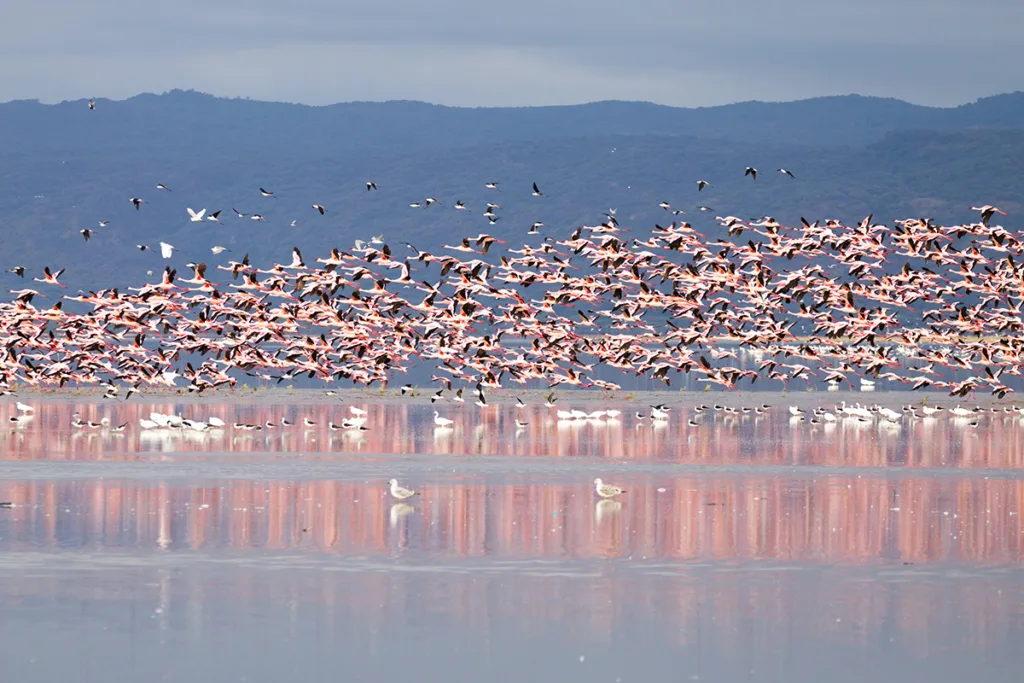
For all its wildlife drama, the Serengeti is also a place of profound calm. Leaving the hustle and bustle of Dubai for the stillness of the savannah was just what we needed to recharge. For families, it is transformative. For children, it is education without walls. For adults, it is a return to wonder. And for all of us, it was the greatest show on earth – one we were privileged to witness from the best seats imaginable. Oh, and did I mention a lake dappled in vibrant patches of pink, with hundreds of flamingos wading shoulder to shoulder as they looked for food?