
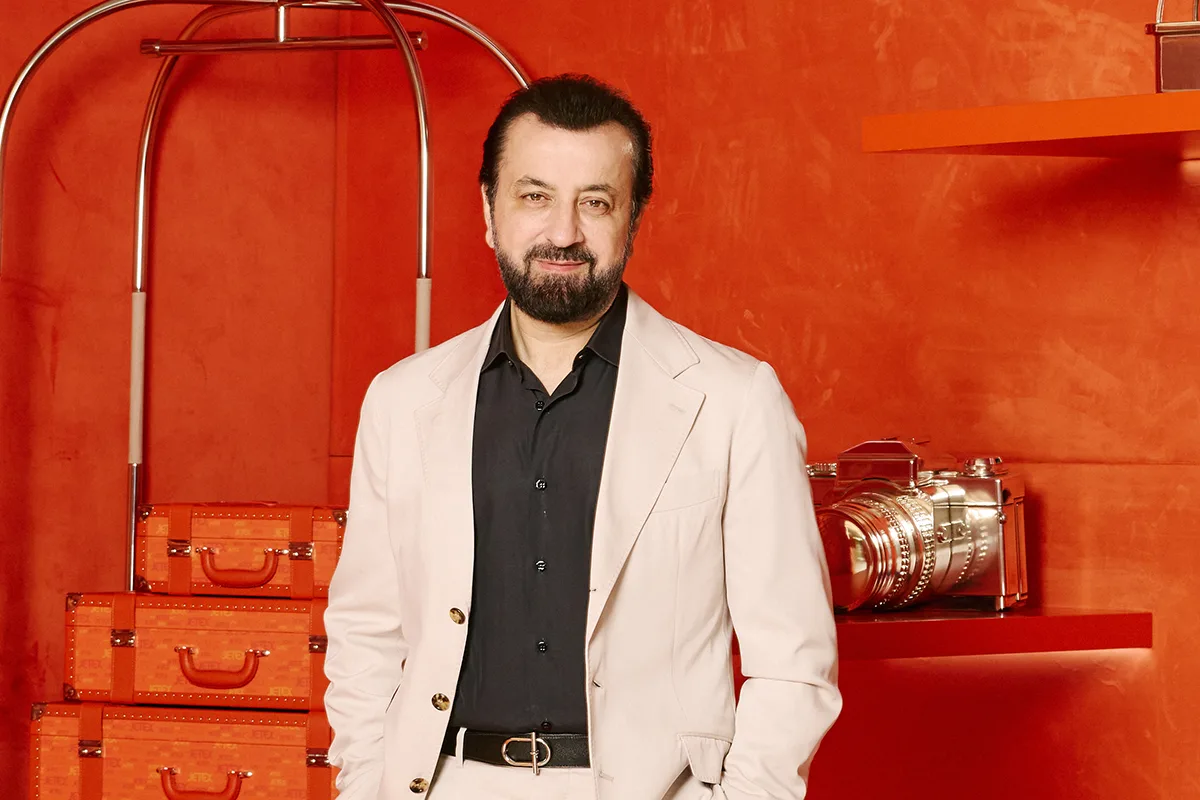
At Damascus Airport, a young Adel Mardini once shuttled passengers and crew between terminals and aircraft. It was hardly glamorous. Yet it was on that tarmac, amid the roar of engines and the scent of jet fuel, where the earliest sparks of what would become Jetex began to ignite.
“From the early days,” Mardini recalls, “I was drawn to good service and the idea of creating memorable experiences. And I always knew I didn’t want to copy anyone but wanted to do something different.”
Two decades later, Mardini is the man behind one of the most distinctive and forward-thinking brands in the private aviation industry. Jetex has redefined what it means to travel in the modern world, not merely as a mode of transport, but as a curated luxury lifestyle that blurs the lines between aviation, hospitality, and design.
Filling a gap
Jetex was founded in 2005 in Dubai, a city synonymous with ambition and luxury travel. But it didn’t start with private jets; it began with logistics. “We began with clearances, fuelling, flight planning – that make private aviation possible,” says Mardini. “By solving the pain points others overlooked, I created a brand rooted in precision, trust, and elevated service.”
As private aviation grew globally, Jetex wasn’t just keeping up – it was setting the pace. “Dubai gave us the infrastructure and global connectivity to launch something big,” Mardini says. From there, Jetex began building a network that currently spans continents, with services extending far beyond airport runways.
It’s not just the scale that stands out – it’s the DNA of the brand. “We don’t copy. We wanted to do something different,” Mardini states simply.
While many see airport terminals as functional spaces, Mardini sees them as stages for experience. Inspired by grand hotel lobbies and private members’ clubs, Jetex terminals are designed as destinations in their own right.
“What a five-star hotel achieves in a full day in terms of guest service, we execute with precision in 15 minutes,” Mardini explains. “Our terminals combine privacy, discreet yet thoughtful service, modern technology, curated art, and even retail. It’s a luxury universe that reaches much beyond the aviation industry.”
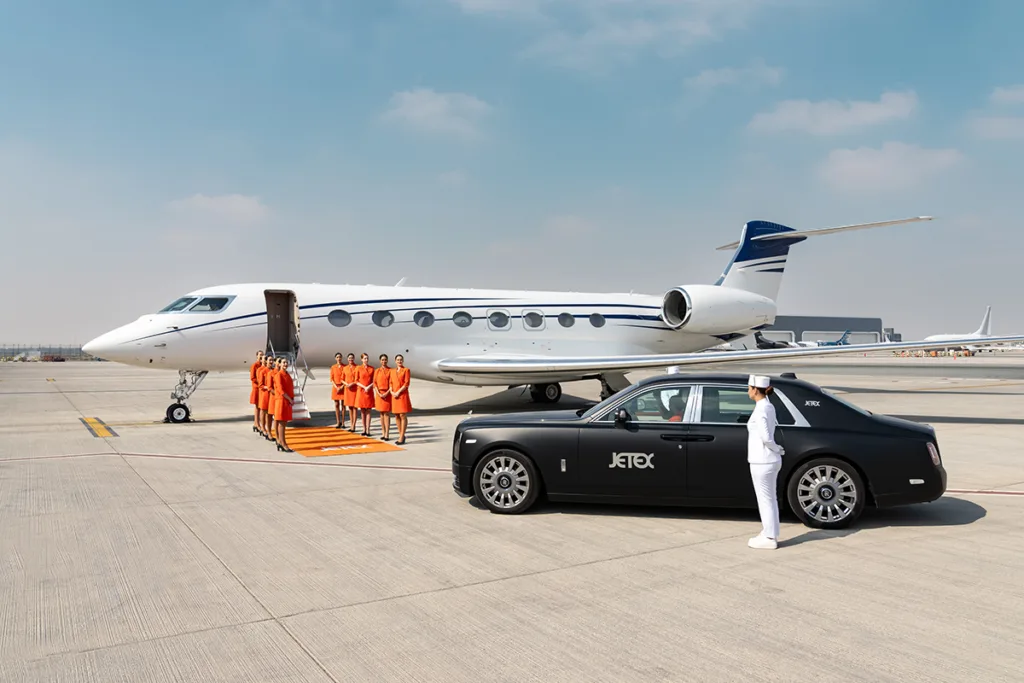
Every Jetex lounge features bespoke interiors, sensory ambience, and concierge-level hospitality. “Most five-star hotels charge around $15,000 a night for a presidential suite; our clients spend that per hour in a private jet,” Mardini notes. “At such a price, every detail must be perfect – from the warm welcome to the in-flight comfort.”
And it doesn’t stop at aesthetics. Behind the scenes, Jetex staff manage complex logistics – crew visas, aircraft safety, security, fuelling, all delivered with discretion.
Behind the slick exteriors and luxury branding lies an intense human energy. “We don’t just hire for skill – we hire for passion,” says Mardini. “Passion is at the core of everything we do.”
Even as Jetex expands, Mardini stays intimately involved. “Despite Jetex’s success – 100% growth since 2023 and over 1,000 employees – I remain very involved personally. There’s so much more to build.”
His mantra? “Go big or go bigger”.
Redefining the private jet traveller
The profile of Jetex’s clientele has evolved dramatically. “Before Covid, private jet travellers were predominantly business focused – oil and gas executives, diplomats, government officials and typically of an older demographic,” Mardini explains. “Today, it’s crypto investors, tech founders, and celebrities aged 35 to 55. And they’re not just flying once, they’re staying in the market.”
These new travellers aren’t buying into luxury as status – it’s simply how they live. “There’s a regular client who once told me, ‘I sold my house, I got rid of my staff, but I didn’t sell my jet,’” Mardini shares. “That plane wasn’t a trophy – it was freedom.”
This cultural shift is something Jetex anticipated. “Today’s flyers aren’t looking for luxury as status, they see it as a default. For them, flying private is not a privilege, it’s how they live and it’s not about the seat but about timing, efficiency and trust.”
What began as a ground handling operation is now fast becoming a luxury ecosystem. “Jetex is becoming a destination and lifestyle magnet in itself,” Mardini says.
As private jet users increasingly own yachts, helicopters and second homes, Jetex is extending its services across all aspects of high-end travel. “When we supply a jet, we also provide a dedicated butler,” he explains. “And when the client lands, they ask, ‘Can we continue Jetex services with us onto the yacht?’ So we’re creating a truly seamless 360-degree experience”.
This vision draws inspiration from fashion houses like Louis Vuitton and Dior, which have successfully crossed into hospitality and dining. “We’ve already started exploring branded lounges, hospitality concepts and private member experiences,” says Mardini. “Jetex is not just the world’s favourite and most followed private aviation brand – it’s a luxury universe that reaches much beyond the aviation industry”.
Sustainability at supersonic speed
With the aviation industry undergoing increasing scrutiny from sustainability champions, Jetex is taking bold steps toward pushing for greener aviation. “Jetex is poised to help pioneer the next wave of aviation: electric vertical take-off and landing (eVTOL) aircraft,” Mardini reveals.
Jetex has partnered with industry disruptors like Archer and Joby to build the necessary infrastructure and shape passenger experiences around this future technology.
And it’s not just futuristic concepts. Jetex is already actively promoting Sustainable Aviation Fuel (SAF), where possible. “We were the first to provide SAF for private jets during COP28 in Dubai,” Mardini states proudly. “Our mission is to expand SAF availability globally, including in the commercial aviation sector.”
Interestingly, the hurdle is not cost but supply. “Many of our clients want to reduce their footprint. We just need the infrastructure to keep up”.
What it takes to lead
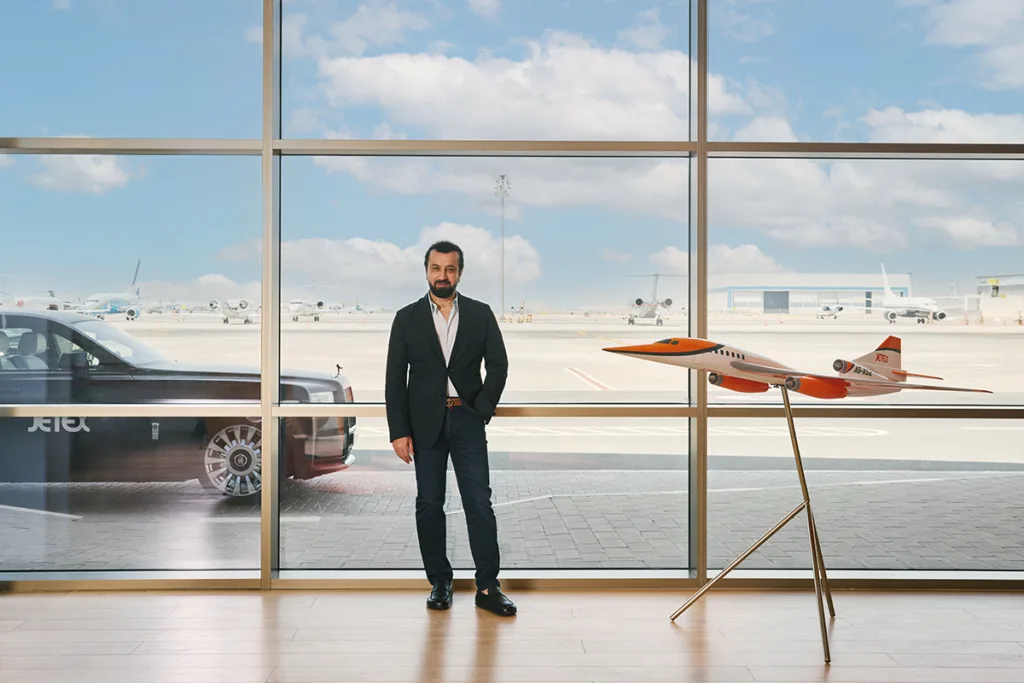
Mardini is not shy about what it takes to succeed at a global scale. “A successful CEO needs strategic financial discipline, a commitment to brand exclusivity and profitability, strong leadership to attract and retain top talent, and a deep understanding of evolving consumer desires and culture to foster innovation and continuous product excellence,” he says. “But above all, the CEO must be passionate and notice the smallest details.”
It’s that obsession with consistency, reliability and world-class service that defines Mardini’s leadership. “Quality, reliability and consistency – wherever in the world we are – is everything in our business,” says Mardini.
When asked how he wants Jetex to be remembered, Mardini says. “Jetex was born as a dream of perfection in aviation and everything we do,” he says. “We are innovators who brought change to a 100-year-old industry.”
Looking ahead, he’s already working on the next flagship – a multifunctional terminal that combines opulence, design and lifestyle in a single destination. “My dream is to develop and launch a multifunctional destination terminal – an opulent private terminal that reimagines the travel experience through hospitality and lifestyle,” he hints. “Now in design, it may debut within the next two years”.
Final boarding call
Adel Mardini’s journey from airport shuttle driver to aviation visionary is no accident. It is the result of bold thinking, relentless standards, and a refusal to settle for the ordinary. Jetex is no longer just a company – it’s an identity, a mindset, and a movement.
As Mardini reflects on two decades of defying expectations, he says, “We don’t just fly people. We transport lifestyles, identities, dreams. And we’re just getting started.”