
A slowdown in China, Europe and the US has left global EV makers with excess factory capacity that is now being redirected to the Gulf, bringing a wider range of models at sharper price points and unlocking latent demand in the United Arab Emirates and Saudi Arabia.
Roland Berger’s EV Charging Index 2025 shows the UAE remained the GCC’s largest EV market in 2024, with close to 24,000 electric and plug-in hybrid cars sold, while Saudi Arabia saw sales jump nearly tenfold to more than 11,000. Across Qatar, the UAE and Saudi, sales penetration doubled from roughly 2 per cent to roughly 4 per cent in 2024.
“Because growth has cooled elsewhere, there’s excess capacity in the system,” said Arvind CJ, partner and automotive sector lead at Roland Berger Middle East. “That’s made the Middle East more relevant for OEMs to push models – especially Chinese brands – so consumers here suddenly have more models at the right price points.”
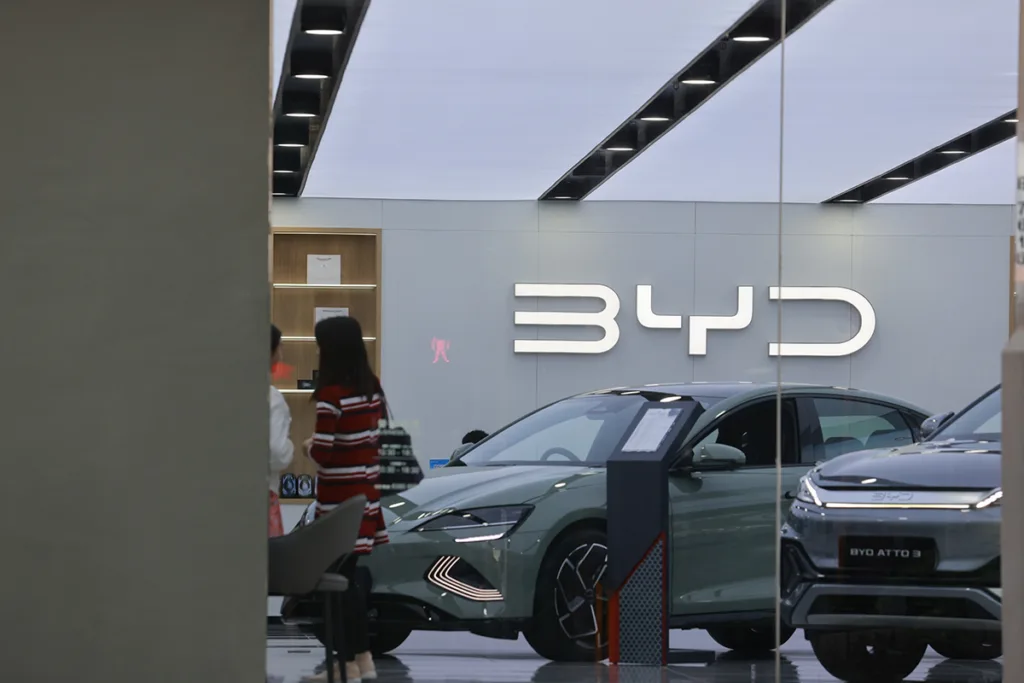
In the past two years, Chinese EV brands have piled into the UAE and Saudi, widening model choice and sharpening prices as new showrooms and distributor tie-ups go live.
Arvind said Gulf buyers were already open to EVs; the earlier blockers were price-point/model availability and charging access. With more competitive imports landing, that constraint is easing – and GCC consumers, particularly in Saudi and the UAE, are unusually willing to try new marques, a dynamic he said is reshaping showrooms in Riyadh and Dubai.
EV penetration in Gulf to hit 10-15% by 2030
Looking ahead, Arvind said GCC EV penetration is on track for 10-15 per cent by 2030, led by the UAE and Saudi, with upside “if either country introduces buyer incentives” such as cash support or tax breaks.
Sovereign wealth funds could extend their mobility bets beyond well-known, historic stakes in carmakers, he added, saying it “wouldn’t be a surprise” to see new moves into charging infrastructure or additional investments in carmakers by regional funds.
Saudi Arabia’s surge, he said, also reflects removed certification bottlenecks and a healthier demand mix across government procurement, fleets/ride-hailing and retail buyers – rather than reliance on a single segment – supporting more durable growth.
Charging satisfaction is already world-class – Qatar 97 per cent, UAE 95 per cent, Saudi 94 per cent – underpinned by visible build-outs. Dubai counts roughly 1,270 public charging points as of August 2025 and ADNOC-TAQA plans 500 for Abu Dhabi by 2028; Saudi’s PIF-backed EVIQ targets 5,000 chargers across 1,000 locations by 2030.
How Gulf drivers are using EVs
Gulf drivers are using EVs as daily cars, not novelties, the report found. Nearly half drive daily or almost daily, whilst one in three covers more than 20,000 kilometres annually – amongst the highest proportions in the study and mirroring behaviour in mature European markets such as Norway and Germany.
Loyalty rates are high, with 91 per cent of GCC battery electric vehicle owners saying they would consider one as their next car, above the global average of 87 per cent. The UAE reached 94 per cent, second only to China’s 99 per cent.
However, purchase motivations vary by market. Lower running and maintenance costs are the top driver in Qatar, cited by 55 per cent of buyers, and the UAE at 52 per cent. Saudi Arabian buyers prioritise advanced technology, cited by 48 per cent of owners, a figure surpassed only in China at 49 per cent. Environmental impact ranks third in Saudi Arabia at 43 per cent and second in the UAE at 47 per cent.
Charging behaviour also differs. Saudi Arabia leads in private home-charger ownership, with 62 per cent of EV drivers having their own unit. The UAE shows the highest use of shared or semi-private chargers at 33 per cent, reflecting the prevalence of residential towers. Qatar sits between the two, with 59 per cent owning a private charger and 28 per cent sharing.
Public charging preferences diverge further. UAE drivers use retail centres most heavily at 79 per cent, followed by community parking at 47 per cent. Saudi Arabia blends highways at 62 per cent with community parking at 51 per cent. Qatar leans on highways at 68 per cent and malls at 50 per cent.