
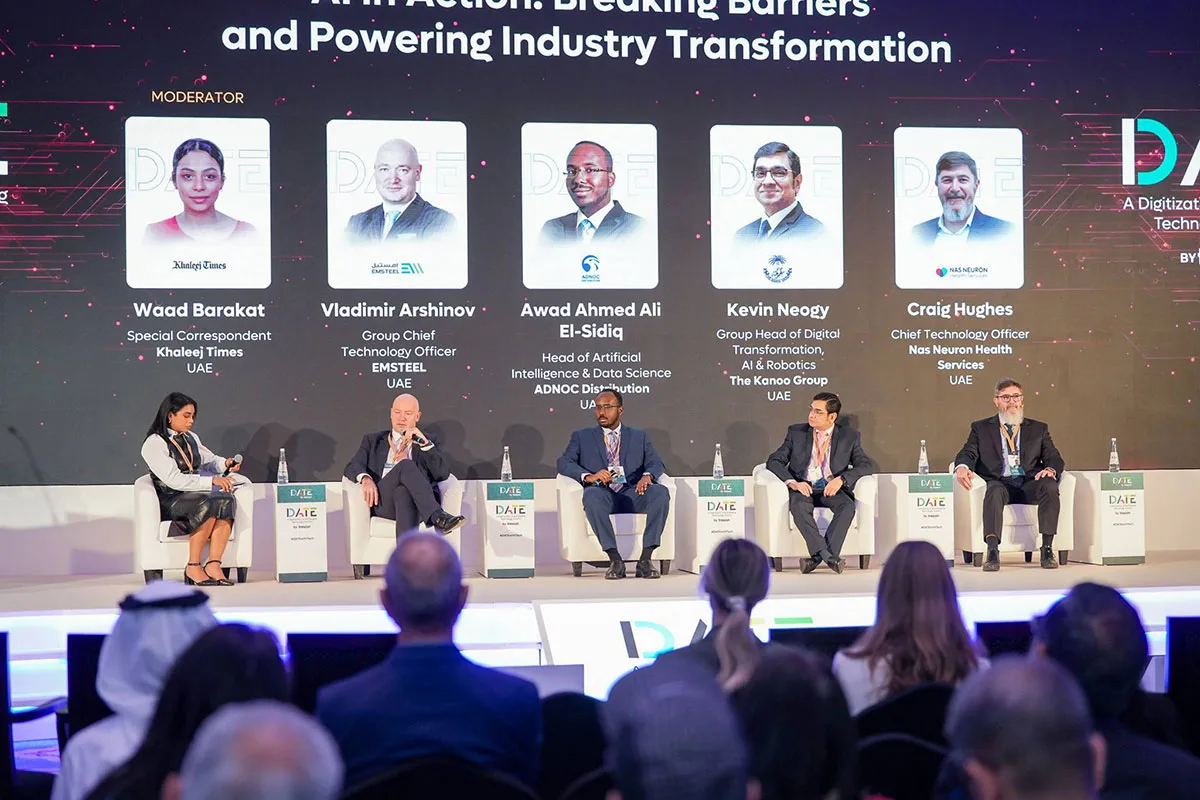
As DATE MENA 2025 drew to a close at Madinat Jumeirah, the summit left a clear imprint on the region’s technology agenda: MENA is no longer at the edge of digital transformation — it is shaping its trajectory. Organised by Trescon and co-located with CARE, a Climate Action, Renewable Energy & Sustainability Forum, the summit gathered leaders across government, enterprise, finance, tech and investment to examine how AI, digitisation and emerging technologies are becoming central forces in economic strategy.
Across two days, the discussions reflected a shift from exploration to implementation. Whether the focus was virtual assets, cybersecurity, AI governance or enterprise automation, a recurring message emerged: the region is building the systems, regulations and capabilities required to scale technology adoption with intent and responsibility.
A region moving from pilots to real deployment
The conversations across the summit highlighted how AI has moved from theoretical promise to practical deployment. Industry leaders shared how AI is being used to streamline industrial operations, support healthcare delivery, automate logistics and introduce new models of financial services. The discussions underscored that MENA’s AI strategy now extends far beyond experimentation.
Dubai’s growing ambition in AI and blockchain further reinforced this momentum. Government leaders set out how integrated digital strategies — combining advanced regulation with sector-wide adoption — are positioning the city as a global reference point for responsible innovation.
Cybersecurity and governance take priority
Another strong theme was resilience. With digital adoption surging, cybersecurity leaders emphasised the need for stronger, more adaptive security architectures. Zero-trust models, cloud-first security and AI-enabled defences featured heavily in expert discussions, reflecting how organisations are preparing for a more complex threat landscape.
On the governance front, interest in global AI standards — including ISO 42001 and the EU AI Act — signalled growing maturity across private and public sectors. Organisations demonstrated a willingness not only to adopt AI, but to do so with ethical, regulatory and operational rigour.
Innovation showcases reflect a broader digital shift
Innovation remained at the heart of DATE MENA’s agenda. The summit’s exhibition and innovation stages featured emerging tech providers, AI-first start-ups and accessibility-focused solutions. From automation platforms to real-time speech-to-sign-language systems, the technologies on display demonstrated both commercial value and social relevance.
The FutureTech World Cup added an entrepreneurial dimension, with start-ups pitching high-growth solutions to a jury of investors. The strong investor turnout underscored the region’s growing appeal as a launchpad for tech ventures.
A platform for regional collaboration
One of DATE MENA’s defining strengths was its ability to bring together stakeholders who rarely share a single platform — policymakers, enterprise leaders, technologists, sustainability specialists and investors. The summit’s co-location with CARE MENA further bridged conversations between digital transformation and climate-aligned innovation, a pairing increasingly central to the region’s economic strategy.
Throughout the venue, the enthusiasm for collaboration was evident. Exhibitors reported strong engagement, while investors and enterprises explored partnerships reflecting the region’s appetite for cross-sector innovation.
Shaping the next phase of MENA’s digital economy
Reflecting on the summit, Trescon CEO Naveen Bharadwaj noted that the energy and depth of conversation reflected a region ready to accelerate meaningful transformation. That sentiment echoed across the event, where technology leaders consistently emphasised readiness — not just interest — in deploying next-generation systems.
As DATE MENA 2025 concluded, it reinforced its position as one of the region’s leading platforms for understanding and advancing the technologies that will define the next decade. More than a showcase, the summit functioned as a barometer of regional intent: ambitious, coordinated and increasingly aligned around a shared digital future.